Association of TLR-2 gene polymorphisms with susceptibility to Pulmonary Tuberculosis at Northwest Ethiopian population, a case control study
Menberu Wubete1 ✉
Menberu WubeteCorresponding author- 1 Department of Medical Laboratory sciences, College of Medicine and Health Sciences, Dire dawa University, Dire daw, Ethiopia
Yetimwork Aleka2
Yetimwork Aleka- 2 Department of Immunology and Molecular Biology, School of Biomedical and Laboratory Sciences, College of Medicine and Health Sciences, University of Gondar, Ethiopia
Debasu Damtie2
Debasu Damtie- 2 Department of Immunology and Molecular Biology, School of Biomedical and Laboratory Sciences, College of Medicine and Health Sciences, University of Gondar, Ethiopia
Yeshambel Belyhun2
Yeshambel Belyhun- 2 Department of Immunology and Molecular Biology, School of Biomedical and Laboratory Sciences, College of Medicine and Health Sciences, University of Gondar, Ethiopia
Meaza Zewudie3
Meaza Zewudie- 3 Armaur Hanssen Research Institute, Addis Ababa, Ethiopia
Mahder Girma1
Mahder Girma- 1 Department of Medical Laboratory sciences, College of Medicine and Health Sciences, Dire dawa University, Dire daw, Ethiopia
Dagmawi Woldesenbet4
Dagmawi Woldesenbet- 4 Department of Medical Laboratory sciences, College of Medicine and Health Sciences, Wachamo University, Hossana, Ethiopia
Mulualem Lemma2
Mulualem Lemma- 2 Department of Immunology and Molecular Biology, School of Biomedical and Laboratory Sciences, College of Medicine and Health Sciences, University of Gondar, Ethiopia
Show affiliations (4)
- 1Department of Medical Laboratory sciences, College of Medicine and Health Sciences, Dire dawa University, Dire daw, Ethiopia
- 2Department of Immunology and Molecular Biology, School of Biomedical and Laboratory Sciences, College of Medicine and Health Sciences, University of Gondar, Ethiopia
- 3Armaur Hanssen Research Institute, Addis Ababa, Ethiopia
- 4Department of Medical Laboratory sciences, College of Medicine and Health Sciences, Wachamo University, Hossana, Ethiopia
Published
Abstract
BackgroundTuberculosis is one of the leading causes of mortality and morbidity worldwide. Polymorphisms in the TLR-2 gene have a diverse influence on the innate immune response and may result in the susceptibility of active pulmonary tuberculosis diseases among particular families, ethnicities, and races. However, the genetic variation in TLR2 in the susceptibility to PTB in our population has not been previously investigated. Thus, this study assesses the association of TLR-2 gene polymorphisms with susceptibility to PTB in Northwest Ethiopian population. Material and method: A case-control study was conducted from March 5, 2022, to March 30, 2023. A total of 101 study participants were recruited in TB clinic using a convenient sampling technique. Socio-demographic and clinical data were collected using structured questionnaires via face-to- face interviews and reviewing medical records, respectively. Three milliliter of venous blood sample was collected from each participant. The DNA was extracted using an automated Maxwell® 16 kit and the gene variants in TLR-2 (G2258A and T597C) genes were genotyped using a tetra allele refractory mutation system-based PCR. The data were coded, entered into Epi-Data Manager 4.6, and exported into SPSS 25 statistical software for analysis. A binary and multivariable logistic regression analysis was done to determine the association between TLR-2 gene polymorphisms and PTB. A p-value less than 0.05 were considered significant.
ResultsOur findings showed that the CC (mutated) genotype in TLR2 T597C was overrepresented and significantly associated with PTB as compared to healthy control groups (CC; AOR = 4.54; p = 0.028). The C allele of T597C polymorphism was also associated significantly with PTB as compared to LTBI (C; AOR = 2.77, p = 0.017) and healthy controls (C; AOR = 3.4, p = 0.001). While the gene variant G2258A of the TLR2 gene was not detected in our study participants.
ConclusionOur study indicated that TLR2 T597C gene variants are significantly associated with PTB susceptibility in our study groups. To confirm our findings and comprehend the mechanism of these gene variants of TLR polymorphism in PTB, future investigations in a larger sample are required.
1 Background#
Tuberculosis (TB) is one of the most communicable diseases caused by Mycobacterium tuberculosis (MTB). It is an intracellular pathogen transmitted by inhalation of aerosolized droplets containing bacteria (1). It is a global public health problem that has killed more people than any other bacterial pathogen in human history (2). According to a report from the World Health Organization (WHO), 10.6 million people were affected by TB worldwide, which increased by 4.5% from 10.1 million as compared to 2020 reports. A total of 1.6 million people died from TB in 2021. Globally, TB is the 13th leading cause of death and the second leading infectious cause of death after coronavirus disease-19 ( above HIV) (3).
The earliest encounter between host and pathogen in TB occurs at the interface between innate immune cells and MTB (4). The innate immunity to MTB is mediated by a variety of germ line-encoded pattern recognition receptors (PRRs) (5). Toll-like receptors (TLRs) are one subset of PRRs that are a cornerstone for the innate immune response (6). The TLRs are a trans-membrane protein family with leucine-rich repeats (LRR) and toll-interleukin 1 receptor (TIR) domains (7). The TLRs that play a critical role in MTB recognition are TLR2 (8). Toll-like receptor 2 can recognize a wide range of mycobacterial PAMPs, including lipoarabinomannan (LAM), lipomannan (LM), and phosphatidylinositol dimannoside (PIMs) (9). Toll Like Receptor 2 can form heterodimers with both TLR1 and TLR6 (10), which recognizes triacylated and diacylated lipopeptides, respectively (11).
After recognizing PAMPs in a particular cell type, the cytosolic TIR domain associated with myeloid differentiation protein 88 (MyD88) and Toll/IL-1R domain-containing adaptor-inducing IFN-β (TRIF) adaptor molecules are activated. Then, MyD88 recruits interleukin 1 receptor-associated kinase 4 (IRAK- 4) that phosphorylates IRAK1, which in turn activates TNF receptor-associated factor 6 (TRAF6). Both proteins leave the receptor complex and interact with TGF-β-activated kinase 1 (TAK1). Then, TAK1 becomes phosphorylated and activates the I-κB kinase (IKK) complex comprising IKKα, IKKβ, and IKKγ, and mitogen-activated protein kinase (MAPK) leading to the activation of NF-κB and c-Jun N-terminal kinases (JNK) transcription factor signaling pathways, respectively (12). The activation of these transcription factor signaling cascades promotes the production of pro-inflammatory cytokines (IL- 6, IL-12, TNF-α), type I interferon, and chemokine expression; and plays an essential role in the modulation of the host’s innate and adaptive immunity (13).
Toll like receptor 2 is a membrane protein that is expressed on the surface of cells, encoded by the TLR2 gene, which has four exons and is located on chromosome 4q31-33 in humans. It encodes a protein with 784 amino acid residues (14). Theoretically, any genetic variation in the LRR and TIR domains could influence how TLR molecules recognize the PAMPs and translate their signals (15). The most studied single nucleotide polymorphisms (SNPs) found on the conserved TIR domain in the C-terminal end of the TLR2 gene is G2258A (rs5743708) (16). It is a non-synonymous SNP that causes amino acid substitution from arginine (Arg) to glutamine (Gln) at the position of 753 (Arg753 Glu) (16). The Arg753 Glu polymorphism could resulting in impaired tyrosine phosphorylation of TLR2, TLR2-TLR6 dimerization, suppression of transcription factors such as NF-κB activation, and decreasing secretion of important inflammatory mediators (17). It leads to a reduced response of macrophages to bacterial peptides and results in an attenuation of the host immune response, thus increasing susceptibility to TB (18, 19, 20).
Another SNP found in the extracellular domain of the LRR of TLR2 is T597C, located at the position of 199 (Asn199 Asn). It is a synonymous SNP that did not result asparagine (Asn) amino acid alteration (21). Synonymous SNPs can modulate mRNA structure (22), influence protein folding, and ultimately alter protein function (23). This type of SNP may also lower TLR expression, attenuate the host’s innate immune response, and result in decreased macrophage function in response to infection with MTB (21).
According to estimates, approximately 90% of TB infected individuals will stay asymptomatic with latent infection (24), whereas only 10% of persons infected with MTB will develop active TB disease at some point in their lives, implying that the majority of those infected have a protective immune response (24, 25). Different studies concluded that TB is a genetically primed and determined infectious disease, and the host genetic polymorphism is the mechanism that leads to the progression from infection to TB disease (26, 27, 28).
Host genetic variations involved in innate immunity are thought to be the most probable factor predisposing individuals to the development of TB (29) and may play a significant role in the modulation of immune responses to MTB infection and the clinical progression of TB (30).
Mutations in TLR producing genes could cause structural and functional changes in these receptors, altering immunological responses and influencing disease development (31). The ability of certain individuals to respond properly to TLR ligands may be impaired by SNPs within TLR genes that affect immune regulation, resulting in a shift in balance between pro- and anti-inflammatory cytokines and altered susceptibility to the infectious disease that might contribute to the pathogenesis of complex diseases including TB (32, 33). This allows the bacterium to evade elimination by the immune system, and the disease subsequently progresses (34).
Genetic variations, especially SNPs, can affect the development of disease in individuals and responses to pathogens, drugs, and vaccines (35). In Ethiopia, even though it has a significant health impact, there is no genetic evidence published in the country related to the TLR gene polymorphisms of TB infected people. Thus, this study aimed to determine potential genetic biomarkers of TLR2 gene with the susceptibility of PTB patients in Northwest Ethiopia. The difference in polymorphism within genes involved in the host immune response has been proposed as a plausible reason to explain why some people resist infection more successfully than others and play a major role in determining differential susceptibility to major infectious diseases (36, 37).
The identification of SNPs in host genes associated with susceptibility and resistance to TB plays an important role in investigating potential mechanisms underlying host immune responses to TB disease and will provide a rational basis for developing new approaches to treatment or novel therapies to treat the diseases (34, 36, 38). To date, several studies have already investigated the potential association between genetic polymorphisms in TLRs and susceptibility to TB in several human populations. However, results are in many instances inconsistent and inconclusive, especially when they were conducted in different populations, geography, and environments (39, 40), emphasizing the need for more studies from different human populations (40).
It was believed the study has ultimately hope that through genetic testing, individuals infected for TB will be identified before the onset of the disease – at a time when primary prevention strategies would be safely administered. It is most likely that such predictive genetic testing would be offered to individuals with LTBI before it was made available to the general population. It will add value to our current perspectives of treating, promising vaccine design, or preventing TB diseases. As far as we know, there has not been a study on the TLR2 gene polymorphism-related genetic risk factors for PTB in Ethiopia. Hence, this study aimed to assess the association between TLR2 gene polymorphisms and the susceptibility of PTB patients in Northwest, Ethiopia. In this study, the genotype distribution of T597C and G2258A was determined, and their association with PTB disease susceptibility was analyzed.
2 Method and Material#
2.1 Study area#
The study was conducted in the TB clinic at the University of Gondar comprehensive specialized hospital. The hospital is located in the Central Gondar zone, Gondar Town Administration. The town is located in Amhara National Regional State, 727 kilometers (km) from Addis Ababa, the capital city of Ethiopia. The town is situated at a latitude and longitude of 12° 36′ N and 37° 28′ E, respectively, with an elevation of 2133 meters above sea level. Currently, the population of Gondar town in 2023 is estimated to be 413,000 (41).
The University of Gondar comprehensive specialized hospital is one of the oldest health institutions in Ethiopia, produces many professionals, and has also given huge service to the community since 1954 (42). It is a multidisciplinary, specialized teaching hospital with more than 1,000 beds and approximately 2,000 members of staff. Currently, it provides health care services for more than seven million inhabitants in its catchment area (43). The TB clinic is one of the services delivered by the hospital for the diagnosis of patients with suspected TB, and it provides anti-TB treatment.
2.2 Study design and study period#
A case control study was conducted at UoGCSH from March 5, 2022, to March 30, 2023.
2.3 Source population#
All adult TB patients visiting the TB clinic at the UoGCSH were used as the source population.
2.4 Study population#
All adult patients confirmed with PTB in the TB clinic were taken as case groups during the study period. In addition, people who have no history of TB or active TB diseases collected from Gondar blood bank were taken as a control for the comparison groups.
2.5 Sample size and sampling techniques#
All eligible study participants who fulfilled the inclusion criteria during the study period were included. Thus, a convenient sampling technique was used, and a total of 101 study participants (35 PTB patients, 20 LTBI, and 46 HCs) were enrolled in the study.
2.6 Eligibility criteria#
2.7 Inclusion criteria#
Adult patients (age ≥ 18) confirmed with PTB during the study period were included as case groups in the study. Furthermore, adult individuals (age ≥ 18) who were free from clinical symptoms of active PTB and individuals with no medical history of TB were included as a control group in the study.
2.8 Exclusion criteria#
In case groups, a patient with extra-PTB was excluded. Moreover, individuals with known chronic diseases such as diabetes mellitus and rheumatoid arthritis and viral infections like HIV were excluded from the study.
Individuals with a history of TB, a history of anti-TB treatment, and clinical manifestations of active TB were excluded from control study participant recruitment. In addition, individuals with known chronic diseases such as diabetes mellitus and rheumatoid arthritis and viral infections like HIV were also excluded from the control group.
2.9 Data collection tool and laboratory procedure#
2.10 Socio-demographic and clinical data#
The data was collected by nurse professionals working in TB clinics. The socio-demographic and behavioral factor related data of PTB patients was collected through a face-to-face interview using structured questionnaires.
2.11 Blood specimen collection#
Under aseptic techniques, three milliliters and seven milliliters of venous blood were collected from PTB patients and asymptomatic healthy individuals, respectively. Four milliliters of blood from asymptomatic healthy individuals were distributed to four QFT test tubes (one ml for each tube) for LTBI screening, and the remaining three ml from asymptomatic healthy individuals and PTB patients’ blood were transferred to EDTA test tubes by following the appropriate blood collection procedure. The blood in the EDTA tube was properly mixed with anticoagulants to avoid blood clots before laboratory investigations were made. Each tube was labeled with a unique patient code for easy identification. The blood samples in the EDTA tube were kept under -800C until DNA isolation was done.
2.12 QuantiFERON-TB Gold plus Assay#
The QuantiFERON-TB Gold Plus assay (Qiagen, Germany) was used to measure IFN-γ production from T cells following in vitro stimulation with MTB specific antigens, including ESAT-6 and CFP-10). Four milliliters (4 ml) of blood were transferred to four separate tubes labeled as (Nil, MTB antigen-1, MTB antigen-2, and Mitogen) for antigen stimulation, which were then incubated for 20 hours. The Mitogen tube was used as a positive control, while the nil tube was used to adjust the background value for non-specific IFN-γ detection in blood samples by subtracting from the TB antigen tubes and Mitogen tubes. After a period of incubation, the tubes were centrifuged at 2500 relative centrifugal force (RCF) for 15 minutes, and the plasma samples were separated and transferred into a Nunc tube, and stored at -800 C until transported to Armaur Hansen Research Institute (AHRI), Addis Ababa, with the appropriate cold chain system for IFN-γ analysis. Finally, the presence of LTBI was determined by measuring IFN-γ from plasma using an enzyme-linked immunosorbent assay (ELISA), and the results were interpreted using the TB QFT version 2.71.2 software (44).
2.13 DNA extraction#
The DNA extraction was done on the whole blood samples collected from study participants using the automated Maxwell® 16 kit (Promega Corporation, USA), following the manufacturer’s instructions. The Maxwell® 16 instrument purifies samples using a novel paramagnetic particle, that provides a mobile solid phase that optimizes sample capture, washing, and purification of gDNA (45). Three hundred microliters (µl) of whole blood were added to the tube, and then 300 µl of lysis buffer and 30 µl of proteinase K were added and vortexed for 10 seconds, followed by a quick spine for 15 seconds. Then, it was incubated at 56 0C for 20 minutes at 400 rpm (45).
In the meantime, the Maxwell® 16 cartridge was prepared as follows: The cartridges were placed in the Maxwell 16 cartridge rack and then pressed down on the cartridge to snap it into position. Empty elution tubes were placed for each cartridge, and then 60 µl of elution buffer was added to each elution tube. The seal was carefully peeled back only to the upper first well, and all the incubated material of each sample was transferred to well #1 of each cartridge, and one plunger was placed into the well of each cartridge. Finally, the rack was placed in the Maxwell extractor, and the extraction run started. Following the extraction, the extracted product was transferred to the tube and stored at -80 0C until the PCR amplification (45). The extracted DNA concentrations were measured using a Quibit fluorometer (Invitrogen, USA) (46).
2.14 Tag SNP and its primer sequence selection#
We searched the SNP locations of TLR2 gene in the SNP database of the National center for Biotechnology Information (NCBI) (http://www.ncbi.nlm.nih.gov/SNP). Moreover, based on previously published data on the association of TLR-2 gene with the susceptibility of TB from different studies, two SNPs from TLR-2 genes (G2258A and T597C), were selected. The SNP selection was based on their location, possible functional effect, and associations with PTB diseases.
We used four primers (two external primers and two inner primers) for each SNP. Primer sequences were taken from previous literature, and the primer sequence details for all variants are provided in Table 1. Primers were purchased as lyophilized oligonucleotides (Sigma Aldrich, Germany), and then reconstituted with sterile deionized water to make 100µM concentrations of stock solution. Then, dilutions were made from this stock to reach 10µM and 20 µM working solution and stored at -20 0C.
Table 1 SNPs with their primer sequences and PCR products size used for genotyping TLR2 (G2258A and T597C) gene.
| SNP ID | SNP position (nucleotide/ AA residue) | Chromosome position | Gene location | Primer sequence 5’- 3’ | PCR product size | Reference |
|---|---|---|---|---|---|---|
| TLR2 rs5743708 | +2258G/A Arg753Gln (R753Q) | chr4:154626317 | exon 3 | F Outer: GTT GTG TCT TCA TAA GCG GGA CT R Outer: AGT CCT CAA ATG ACG GTA CAT CC F Inner: AGC GCT TCT GCA AGC TTC G R Inner: GTA GGT CTT GGT GTT CAT TAT CTG CT | Outers: 459 bp A: 271bp G: 234 bp GA: 234 and 271bp | (47) |
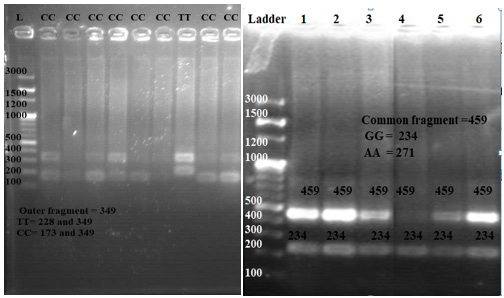
| TLR2 rs3804099 | +597T/C Asn199Asn (N199N) | chr4:154624656 | Exon3 | Fouter: ATTGCAAATCCTGAGAGTGGGAA R outer: CAAACTTTCATCGGTGATTTTCACA F inner: CCAAAAAGTTTGAAGTCAATTCAGAAT R inner: TCATATGAAGGATCAGATGACTTCCG | Outer: 349 bp TT: 228 bp CC:173 bp CT: 228 and 173 bp | (48, 49) |
Notes: AA, amino acid; TLR , toll like receptor; Chr, chromosome; Arg, Arginine; Gln, Glutamine; Asn, Aspargine; base pair, F, forward; R, reverse
2.15 Genotyping of TLR-2 SNPs by PCR#
Genomic DNA extraction from whole blood samples was carried out for genotyping SNPs of TLR2 and TLR4 using the tetra- allele refractory mutation system (T-ARMS)-based PCR method, which only involves a single PCR followed by gel electrophoresis (50). The SNPs were amplified using conventional PCR (TechenTC-412/Keison Products, England) targeting the TLR2 G2258A and T597C gene variants.
The TLR 2 +2258 (G/A) amplification, a 25 μl reaction volume made of 20 µl of master mix (8.7 µl molecular grade water, 2.5 µl 10x PCR buffer, 1.5 µl of 50 Mm MgCl 2, 1.5 µl of each primer (20 μM of both OF and OR and 10 μM of IF and IR (Sigma Al drich, Germany), 1 µl of 10 mM of each dNTP, and 0.3 µl of 5 unit Taq DNA polymerase) and 5µl of the template DNA were used for conventional PCR. A non-template master mix as a negative control was performed in parallel with the samples. Then the tubes were inserted into the thermocycler and run with the program of 95 0C for 5 min of initial denaturation, 40 cycles of 95 0C for 30 sec, 60 0C for 45 sec, and 72 0C for 1 min, and then a final extension at 72 0C for 10 minutes for template amplification.
The TLR 2 +597 (T/C) amplification by thermocycler was achieved using a reaction volume of 25μl containing about 1.5μl of 10 μM of each OF and OR and 1.5 μl of 20μM of each IF and IR, 8.7 μl of PCR water, 2.5 μl of 10x PCR buffer, 1.5 μl of 50 mM MgCl 2, 1μl of 10 mM of each dNTP, 0.3 μl of 5 unit Taq DNA polymerase (Invitrogen, USA) and 5μl template DNA. Amplification was carried out using the PCR conditions of initial denaturation at 94 0C for 5 minutes, followed by 40 cycles of denaturation at 95 0C for 1 minute, annealing at 60 0C for 30 seconds, extension at 72 0C for 30 seconds, followed by a final extension at 72 0C for 10 minutes to allow for complete extension of all PCR fragments.
2.16 Gel electrophoresis#
PCR products are subjected to gel electrophoresis on a 2% agarose gel stained with Modri Green advanced DNA staining dye to visualize DNA in an ultraviolet (UV) trans illuminator to determine the allele and genotype frequency of the PCR product (51). The obtained pattern was analyzed against 50- bp DNA ladders (available commercially).
2.17 Data and sample quality control#
The data collection tool developed from different studies was prepared in English, and translated to the local Amharic language, and then re-translated back to English. Before the actual work, training was given to data collectors to assure that it would be proper and understandable about the objective and relevance of the study, confidentiality issues, the rights of study participants, and result recording. Another orientation was also given about blood specimen collection, storage, and processing. The principal investigator makes daily checkups and monitors to ensure the completeness and consistency of the information collected and sample collection procedures.
The pre-analytical, analytical, and post-analytical phases of quality assurance were carried out during sample processing by carefully following standard operating procedures (SOPs). SOPs and manufacturer instructions were strictly followed throughout the procedures, and all reagents were stored and prepared according to the manufacturer’s instructions.
2.18 Data processing and analysis#
After collection, the data were reviewed, coded, and entered into Epi-Data Manager Version 4.6 software and exported into the SPSS 25 version (IBM Corporation, Armonk, NY, USA) statistical software for analysis. The result was summarized using descriptive statistics. The categorical variables were calculated using the chi-square test between the studied groups. Continuous variables such as age and BMI were expressed as “mean ± standard deviation (SD)”. The genotype and allele frequencies were computed in groups using chi- square cross-tabulation. Binary and multivariable logistic regression analyses were used to determine the association between selected SNPs in the TLR2 gene polymorphisms and PTB. The crude odd ratio (COR) and adjusted odd ratio (AOR) with 95% CI were used to express the strength of the association. A result was considered statistically significant with a p-value of less than 0.05. SNPStats online software [available online: https://www.snpstats.net/start.htm (accessed on September 19, 2022)] was used to calculate the HWE (52).
3 Results#
3.1 Socio-demographic characteristics of study participants#
A total of 101 participants (35 PTB patients, 20 LTBI, and 46 HCs) were enrolled in this study. The sex distributions were 59 (58.4%) males and 42 (41.6%) females in the three groups. The mean ages of the participants were 30.94±9.63 for all study participants. In addition, the mean BMI for the study participant was 19.47±2.14 for PTB, 20.74±1.29 for LTBI, and 20.49±1.9 for HC (Table 2).
Table 2 Socio-demographic of study participants at University of Gondar Comprehensive Specialized Hospital from March 2022, to March 2023 (N = 101).
| Characteristics | Category | PTB (n, %) | LTBI (n, %) | HC (n, %) | Total (n, %) |
|---|---|---|---|---|---|
| Mean age | Mean ±SD(years) | 35.03±12.2 | 31.05±7.95 | 27.78±6.5 | 30.94± 9.63 |
| BMI | Mean ±SD (Kg/m2) | 19.47±2.14 | 20.74±1.29 | 20.49±1.9 | 20.189± 1.95 |
| Sex | Male Female | 24 (68.6%) 11(31.4%) | 12(60.0%) 8(40.0%) | 23 (50.0%) 23(50.0%) | 59 (58.4%) 42(41.6%) |
Note: Categorical variable were computed by Pearson’s x2 test; mean difference for age and BMI between groups were analyzed using one way ANOVA test: PTB, pulmonary tuberculosis; LTBI, latent tuberculosis infection; HC, healthy control; BMI, body mass index; SD, standard deviation.
3.2 Clinical characteristics of PTB patient participants#
Clinical data from PTB patients, such as signs and symptoms of PTB, were collected from the patient’s medical chart. From the total of 35 PTB-infected study participants, 34 (97.14%) had coughs, and 24 (68.57%) had night sweats (Table 3).
Table 3 Clinical characteristics of PTB infected adult patients at University of Gondar Comprehensive Specialized Hospital from March 2022 to March 2023 (N = 35).
| Clinical characteristics | Category | PTB patients (N=35) n (%) | |
|---|---|---|---|
| Sign and symptoms of PTB | Cough | Yes No | 34 (97.14%) 1 (2.86%) |
| Fever | Yes No | 28 (80%) 7 (20%) | |
| Chest pain | Yes No | 28 (80%) 7 (20%) | |
| Night sweating | Yes No | 24 (68.57%) 11 (31.43%) | |
| Weight loss | Yes No | 19 (54.28%) 16 (45.72%) | |
| Loss of appetite | Yes No | 25 (71.43%) 10 (28.57%) | |
| Weakness | Yes No | 29 (82.85%) 6 (17.14%) | |
Notes: PTB, pulmonary tuberculosis; N, number; %, percentage
3.3 Distribution of TLR2 (T597C and G2258A) gene polymorphisms in the study participants#
We evaluated the HWE using SNP Stat online software for each detected SNP before the genetic association analysis with PTB diseases. As outlined in Table 4, the genotype frequencies of T597C did not deviate from the HWE in PTB (p = 0.12), LTBI (p = 0.67), and HC (p = 0.1) participants.
The genotypes and allele frequencies in TLR2 G2258A and T597C polymorphisms among PTB, LTBI and HC study participants
The TLR2 G2258A and T597C gene polymorphisms were performed in 101 study subjects. The distributions of TLR2 (+597T/C) CC mutated homozygote, TC heterozygote, and TT wild-type homozygote genotypes were 50 (49.5%), 27 (26.7%), and 24 (23.8%), respectively, among all study participants. In PTB patients, the frequencies of the TT genotype were 5 (14.3%), the TC genotype was 7 (20.0%), and the CC genotype was 23 (65.7%). Genotypic frequencies of TLR2 gene polymorphisms at (+597T/C) among LTBI and controls are presented in Table 4.
Regarding allele frequencies, all study participants were more likely to have a mutated (C) allele as compared to a wild-type (T) allele, with frequencies of 123 (60.9%) and 79 (39.1%), respectively. Furthermore, the mutated-type (C) allele frequency was found to be high in PTB patients 53 (75.7%) when compared with LTBI 21 (52.5%) and HCs 49 (53.3%) (Table 4).
The G2258A SNP in the TLR2 gene was not detected in all study participants. Only the wild-type G allele was observed in PTB, LTBI, and HC, as shown in Figure 1b.
Table 4 The genotypes and alleles frequencies distribution in TLR2 gene polymorphisms at (T597C and G2258A) among PTB patients, LTBI and HCs at University of Gondar Comprehensive Specialized Hospital from March 2022 to March 2023 (N=101)
| SNP | Genotype | PTB (N=35) | LTBI (N=20) | HC (N=46) | Total (Ng=101,Na=202) |
|---|---|---|---|---|---|
| Allele | |||||
| n (%) | n (%) | n (%) | n (%) | ||
| TLR-2 T597C | |||||
| TT(wild homozygote) | 5(14.3%) | 5(25%) | 17 (37%) | 27 (26.7%) | |
| TC (heterozygote) | 7(20%) | 9 (45%) | 8 (17.4%) | 24(23.8%) | |
| CC(mutant homozygote) | 23(65.7%) | 6(30%) | 21(45.7%) | 50(49.5%) | |
| T(wild type) | 17(24.3%) | 19(47.5%) | 43(46.7%) | 79(39.1%) | |
| C(mutant type) | 53(75.7%) | 21(52.5%) | 49(53.3%) | 123(60.9%) | |
| HWEp | 0.12 | 0.67 | 0.1 | ||
| TLR-2 G2258A | |||||
| GG (wild homozygote) | 35 (100%) | 20 (100%) | 46 (100%) | 101 (100%) | |
| GA(Heterozygote mutant) | 0(0) | 0(0) | 0(0) | 0(0) | |
| AA (wild homo) | 0(0) | 0(0) | 0(0) | 0(0) | |
| G (wild type) | 70 (100%) | 40 (100%) | 92 (100%) | 202 (100%) | |
| A (mutant type) | 00 | 00 | 00 | 00 | |
| HWEp | NA | NA | NA | ||
Notes: HC, healthy controls; LTBI, latent tuberculosis infection; PTB, pulmonary tuberculosis; TLR, toll like receptor; SNP, single nucleotide polymorphism; p, computed by Pearson chi- square. NA; not applicable; Na, Number of alleles; Ng, Number of genotypes; HWEp, Hardy Weinberg Equilibrium p-value.
1A
1B
3.4 Association between TLR2 SNPs with PTB patients#
3.5 Association of TLR2 gene polymorphisms at T597C with PTB patients#
We assessed the associations of the TLR2 T597C polymorphism in three groups using a binary and multivariable logistic regression model (Table 5). The regression analysis revealed that the genotype CC in T597C had a significant association with PTB as compared to HC groups (AOR = 4.54, 95% CI = 1.18–11.92, p = 0.028). The C allele in the TLR2 597T/C polymorphism also showed an association with PTB as compared to LTBI (AOR = 2.77, 95% CI = 1.2–6.42, p = 0.017) and HC (AOR = 3.4, 95% CI = 1.6–7.1, p = 0.001).
Table 5 Binary and multivariable logistic regression analysis with the association of T597C TLR2 gene polymorphisms among PTB patients, LTBI, and HCs study participants at University of Gondar Comprehensive Specialized Hospital from March 2022 to March 2023 (N=101).
| PTB vs. LTBI | |||||||
|---|---|---|---|---|---|---|---|
| Gene /SNP | Model | Genotype | PTB (n, %) | LTBI (n, %) | COR (95%CI) | AORa (95%CI) | P |
| Allele | |||||||
| TLR2 T597C | Co-dominant | C/C | 23(65.7%) | 6(30%) | 3.8(0.83-17.7) | 2.34(0.43-12.7) | 0.32 |
| T/C | 7(20%) | 9(45%) | 0.778(0.16-3.79) | 0.547(0.09-3.23) | 0.51 | ||
| T/T | 5(14.3%) | 5(25%) | 1 | 1 | |||
| C | 53(75.7%) | 21(52.5%) | 2.82(1.23-6.45) | 2.77(1.12-6.42) | 0.017 | ||
| T | 17(24.3%) | 19(47.5%) | 1 | 1 | |||
| PTB Vs. HC | |||||||
| TLR2 T597C | Co-dominant | C/C | 23(65.7%) | 21(45.6%) | 3.7(1.17-11.87) | 4.54(1.18-11.92) | 0.028 |
| T/C | 7 (20%) | 8 (17.4%) | 2.97(0.72-12.34) | 3.7 (0.72-12.97) | 0.116 | ||
| T/T | 5 (14.3%) | 17 (37%) | 1 | 1 | 1 | ||
| C | 53(75.7%) | 49(53.3%) | 2.74(1.38-5.4) | 3.4 (1.6-7.1) | 0.001 | ||
| T | 17(24.3%) | 43(46.7%) | 1 | 1 | |||
| LTBI Vs. HC | |||||||
| TLR2 T597C | Co-dominant | C/C | 6 (30%) | 21 (45.6%) | 0.97(0.25-3.74) | 0.97(0.22-4.16) | 0.96 |
| T/C | 9 (45%) | 8 (17.4%) | 3.82(0.96-15.18) | 1.01(0.23-4.38) | 0. 98 | ||
| T/T | 5 (25%) | 17 (37%) | 1 | 1 | |||
| C | 21(52.5%) | 49(53.3%) | 0.97(0.46-2.04) | 0.98 (0.46-2.07) | 0.98 | ||
| T | 19(47.5%) | 43(46.7%) | 1 | 1 | |||
Note : AORa , Adjusted odd ratio for age and body mass index; AORb, Adjusted odd ratio for age, sex, and body mass index; COR, Crude odd ratio; LTBI, latent tuberculosis infection; PTB, pulmonary tuberculosis; TLR, Toll like receptor; SNP, Single nucleotide polymorphism; ref, reference.
4 Discussion#
Host genetics play a critical role in resistance or susceptibility to MTB infection. The host’s innate immune response is the first line of defense against invading pathogens and is vital for the initial defense against MTB and the activation of the adaptive immune response (53). Since the TLR-encoding genes play an important role in host immunity, variants of these genes cause an altered immune response and affect the progression of TB disease. Among these, various studies have identified TLR2 gene variants (T597C and G2258A) that influence PTB risk. However, the direct evidence remains controversial. In the present study, we analyzed the association between TLR2 (T597C and G2258A) gene polymorphisms and susceptibility to PTB in 101 study participants.
The synonymous T597C polymorphisms in the TLR2 gene coding region are associated with susceptibility to PTB disease. Therefore, we analyzed the TLR2 T597C (Asn199 Asn) gene variant in association with PTB. The mutated CC genotype of the T597C TLR-2 gene polymorphism in PTB patients, LTBI, and HC groups was found at 23 (65.7%), 6 (30%), and 21 (45.6%), respectively. We also found that the distribution of the C allele in PTB had a higher frequency distribution than in the LTBI and HC groups (Table 4). The C allele and CC genotype of the T597C-TLR2 gene were significantly associated with PTB patients compared to HC (p = 0.001 and p = 0.028, respectively). These basic findings are consistent with scientific insights that the synonymous SNP T597C located in the TLR2 coding exon can directly alter mRNA transcription and splicing, affect the expression of remaining exons within the genes, the stability of mRNA, and modulate mRNA structure and protein folding (54, 55, 56). Unstable RNA due to synonymous variation has a shorter functional half-life and results in low protein levels (57). Therefore, effects on protein expression can impair the host’s immune response (58). In accordance, a previous study suggested that the synonymous T597C mutations are associated with down-regulated transcription of TLR2 and decreased TLR2 expression levels. Moreover, they reported that the carriers of a CC genotype mutation had significantly lower levels of pro-inflammatory cytokines (IL-6 and TNF-α) than carriers of wild-type TT genotypes of the T597C polymorphism (59). This attenuates the host’s innate immune response, and results in decreased macrophage function in response to infection with MTB and a greater chance of developing TB (21). This finding is consistent with a previous study conducted in the Sudanese (25), Egyptian (60), and Iranian (49) populations.
Contrary to our finding, a study showed that the C allele and CC genotype did not show a significant association with PTB among the Chinese (61), Han Chinese and Tibetan Chinese (29, 62), Mongolian (63), Colombian (64), and Mexican (65) populations. TLR2 polymorphism +597T/C were not associated with TB. The considerable differences in this polymorphism among different populations might explain such a discrepancy.
On the other hand, a previous study depicted that the TLR2 +597 T/C mutated genotype was associated with protection against PTB. A study conducted in the Moroccan (66), Moldavian (67), and Chinese Tibetan populations (68) showed that the TLR2 +597 T/C genotype was associated with protection against PTB. Such discrepancies could result from different environmental and pathogen-induced selection pressures, potential differences in the involved MTB strains, and race-specific differences in the patterns of evolutionary distribution.
In this study, we also analyzed the TLR2 G2258A (Arg753 Gln) gene variant in association with PTB. We did not find the mutated (A) allele in any of the study groups (PTB patients, LTBI, or HCs). Although the G2258A polymorphism of TLR2 is not found in our study, it is a missense variant that affects the structure of the TLR-2 protein in the intracellular domain and produces a non-functional protein since at position 753 of the protein (Arg753 Gln), the amino acid arginine is replaced by glutamine (69). Then, this variant can lead to failures in the recognition mechanisms of mycobacterial antigens. This alteration resulted in impaired TLR2 tyrosine phosphorylation,TLR2-TLR6 dimerization, recruitment of MyD88, repression of transcription factors such as NF-B activation, and reduced secretion of key inflammatory mediators (17).
Similar evidence consistent with our findings has been reported in various studies. The absence of the TLR2 G2258A mutated allele in this study is in line with the results of a study conducted in the Sudanese (70), Iranian (71), Mexican (65), and Brazilian (72) populations. However, in studies conducted in the Sudan (25), Egypt (73), and Chinese (61) population, the TLR-2 Arg753 Gln SNP was reported as associated with PTB disease. The discrepancies between the aforementioned results may be attributed to the different sample sizes and ethnicities.
The main strength of this study is that it can be considered as a benchmark and a preliminary study in Ethiopia that gives baseline information on the genetic and immunological markers of TLR2 gene polymorphisms as risk factors for PTB patients in Ethiopian populations. We identified individuals with LTBI in the HCs, which may strengthen our statistical power to identify potential susceptibility at the locus.
However, we have not analyzed how SNPs influence susceptibility to progression from LTBI to active TB disease, and thus the underlying mechanisms remain to be explored. Second, we used a small sample size, which may limit the statistical power of the study. Thirdly, as with many possible genetic factors, we have not analyzed the probable causes of TB on a large scale in the community.
5 Conclusion#
In this study, the CC mutant homozygote genotypes in T597C of the TLR2 are more frequent among PTB patients than LTBI and HC groups and are significantly associated with PTB when compared with HC participants. In addition, the mutated C allele frequency was high and statistically significant with PTB. This considerable association of the T597C CC genotype and C allele with PTB gives us insight into its role in the susceptibility of PTB.
The G2258A polymorphism of the TLR-2 gene is monomorphic (only the G (wild-type) allele is detected) in all study participants (PTB, LTBI, and HCs groups).
6 Recommendation#
Based on our findings, the following recommendations are forwarded to the researcher:
- This study shows the T597C is associated with the susceptibility to PTB in our study populations, therefore, to come up with a compressive conclusion, it needs a large sample size using a community-based cohort study to clarify the association of these gene variant with PTB in in different parts of Ethiopia.
- We recommend, this study should include additional SNP in TLR2 (like Arg677Trp and Pro631His), and other TLR polymorphisms found in TLR1, TLR4, TLR6, and TLR9 to clarify the association of these TLR genes with PTB.
- We recommend further studies to perform haplotype analyses and explore potential gene-gene interactions.
- We found that the mutated C allele was overrepresented in the study groups. Therefore, it is recommended to evaluate the T597C polymorphism of the TLR-2 gene through sequencing analysis.
Declarations
⚖Ethics statement
◎Competing interests
♥Acknowledgements
Article information
- Published
This article is published open access under the CC BY 4.0 licence. CC BY 4.0 · Corrections policy
References 73#
- 1
Sia JK, Rengarajan J. Immun ology of Mycobacterium tuberculosis infections. Microbiology spectrum. 2019;7(4):7.4. 6.
- 2
Stamm CE, Collins AC, Shiloh MU. Sensing of M ycobacterium tuberculosis and consequences to both host and bacillus. Immunological reviews. 2015;264(1):204-19.
- 3
WHO. Global Tuberculosis report 2022. https:// wwwwhoint/teams/global-tuberculosis-programme/ tb-reports/global-tuberculosis-report-2022/tb-disease- burden. 2022.
- 4
de Martino M, Lodi L, Galli L, Chiappini E. Immune response to Mycobacterium tuberculosis: a narrative review. Frontiers in pediatrics. 2019;7:350.
- 5
Basu J, Shin D-M, Jo E-K. Mycobacterial signaling through toll-like receptors. Frontiers in cellular and infection microbiology. 2012;2:145.
- 6
Yoshida A, Inagawa H, Kohchi C, Nishizawa T, Soma G-I. The role of toll-like receptor 2 in survival strategies of Mycobacterium tuberculosis in macrophage phagosomes. Anticancer research. 2009;29(3):907-10.
- 7
Xia P, Wu Y, Lian S, Yan L, Meng X, Duan Q, et al. Research progress on Toll-like receptor signal transduction and its roles in antimicrobial immune responses. Applied Microbiology and Biotechnology. 2021;105(13):5341-55.
- 8
Kleinnijenhuis J, Oosting M, Joosten LAB, Netea MG, Van Crevel R. Innate Immune Recognition of <i>Mycobacterium tuberculosis</i>. Clinical and Developmental Immunology. 2011;2011:405310.
- 9
Hu W, Spaink HP. The Role of TLR2 in Infectious Diseases Caused by Mycobacteria: From Cell Biology to Therapeutic Target. Biology. 2022;11(2):246.
- 10
Mortaz E, Adcock IM, Tabarsi P, Masjedi MR, Mansouri D, Velayati AA, et al. Interaction of Pattern Recognition Receptors with Mycobacterium Tuberculosis. Journal of Clinical Immunology. 2015;35(1):1-10.
- 11
Mukherjee S, Huda S, Sinha Babu SP. Toll-like receptor polymorphism in host immune response to infectious diseases: A review. Scandinavian journal of immunology. 2019;90(1):e12771.
- 12
Oeckinghaus A, Hayden MS, Ghosh S. Crosstalk in NF-κB signaling pathways. Nature Immunology. 2011;12(8):695-708.
- 13
Kawai T, Akira S. The role of pattern-recognition receptors in innate immunity: update on Toll-like receptors. Nature immunology. 2010;11(5):373-84.
- 14
TLR2 toll like receptor 2 [ Homo sapiens (human). National center for biotechnology information (NCBI). 2023;
- 15
Qrafli M, Najimi M, Elaouad R, Sadki K. Current immunogenetic predisposition to tuberculosis in the Moroccan population. International Journal of Immunogenetics. 2017;44(6):286-304.
- 16
Wu H, Yang L. Arg753Gln Polymorphisms in Toll-Like Receptor 2 Gene are Associated with Tuberculosis Risk: A Meta-Analysis. Med Sci Monit. 2015;21:2196-202.
- 17
Xiong Y, Song C, Snyder GA, Sundberg EJ, Medvedev AE. R753Q polymorphism inhibits Toll-like receptor (TLR) 2 tyrosine phosphorylation, dimerization with TLR6, and recruitment of myeloid differentiation primary response protein 88. Journal of Biological Chemistry. 2012;287(45):38327-37.
- 18
Ogus A, Yoldas B, Ozdemir T, Uguz A, Olcen S, Keser I, et al. The Arg753GLn polymorphism of the human toll- like receptor 2 gene in tuberculosis disease. European Respiratory Journal. 2004;23(2):219-23.
- 19
Biyikli OO, Baysak A, Ece G, Oz AT, Ozhan MH, Berdeli A. Role of Toll-like receptors in tuberculosis infection. Jundishapur journal of microbiology.9(10).
- 20
Azad AK, Sadee W, Schlesinger LS. Innate immune gene polymorphisms in tuberculosis. Infection and immunity.80(10):3343-59.
- 21
Thuong N, Hawn T, Thwaites G, Chau T, Lan N, Quy H, et al. A polymorphism in human TLR2 is associated with increased susceptibility to tuberculous meningitis. Genes & Immunity. 2007;8(5):422-8.
- 22
Shen LX, Basilion JP, Stanton VP. Single-nucleotide polymorphisms can cause different structural folds of mRNA. Proceedings of the National Academy of Sciences. 1999;96(14):7871-6.
- 23
Chamary J-V, Parmley JL, Hurst LD. Hearing silence: non- neutral evolution at synonymous sites in mammals. Nature Reviews Genetics. 2006;7(2):98-108.
- 24
Murray CJ, Styblo K, Rouillon A. Tuberculosis in developing countries: burden, intervention and cost. Bulletin of International Union against Tuberculosis and Lung Disease. 1990;65(1):6-24.
- 25
Mhmoud NA. Association of Toll-like Receptors 1, 2, 4, 6, 8, 9 and 10 Genes Polymorphisms and Susceptibility to Pulmonary Tuberculosis in Sudanese Patients. ImmunoTargets and Therapy. 2023;12:47-75.
- 26
Aravindan P. Host genetics and tuberculosis: Theory of genetic polymorphism and tuberculosis. Lung India: Official Organ of Indian Chest Society. 2019;36(3):244.
- 27
Lai Y-F, Lin T-M, Wang C-H, Su P-Y, Wu J-T, Lin M-C, et al. Functional polymorphisms of the TLR7 and TLR8 genes contribute to Mycobacterium tuberculosis infection. Tuberculosis. 2016;98:125-31.
- 28
Bukhari M, Aslam M, Khan A, Iram Q, Akbar A, Naz A, et al. TLR 8 gene polymorphism and association in bacterial load in southern P unjab of P akistan: an association study with pulmonary tuberculosis. International journal of immunogenetics. 2015;42(1):46-51.
- 29
Casanova J-L, Abel L, Quintana-Murci L. Human TLRs and IL-1Rs in host defense: natural insights from evolutionary, epidemiological, and clinical genetics. Annual review of immunology. 2011;29:447-91.
- 30
Ghanavi J, Farnia P, Farnia P, Velayati AA. Human genetic background in susceptibility to tuberculosis. Int J Mycobacteriol. 2020;9(3):239-47.
- 31
Jahantigh D, Salimi S, Alavi-Naini R, Emamdadi A, Owaysee Osquee H, Farajian Mashhadi F. Association between TLR4 and TLR9 gene polymorphisms with development of pulmonary tuberculosis in Zahedan, southeastern Iran. ScientificWorldJournal. 2013;2013:534053.
- 32
Cai L, Li Z, Guan X, Cai K, Wang L, Liu J, et al. The Research Progress of Host Genes and Tuberculosis Susceptibility. Oxid Med Cell Longev. 2019;2019:9273056.
- 33
Trejo-de la OA, Hernández-Sancén P, Maldonado-Bernal C. Relevance of single-nucleotide polymorphisms in human TLR genes to infectious and inflammatory diseases and cancer. Genes Immun. 2014;15(4):199- 209.
- 34
Derakhshan M, Sadeghi R. The role of toll-like receptor gene polymorphisms in tuberculosis susceptibility: a systematic review and meta-analysis. Reviews in Clinical Medicine. 2016;3(4):133-40.
- 35
Teräsjärvi J, Hakanen A, Korppi M, Nuolivirta K, Gröndahl- Yli-Hannuksela K, Mertsola J, et al. Rapid detection of functional gene polymorphisms of TLRs and IL-17 using high resolution melting analysis. Sci Rep. 2017;7:41522.
- 36
Areeshi MY, Mandal RK, Dar SA, Jawed A, Wahid M, Lohani M, et al. IFN-γ+ 874 A> T (rs2430561) gene polymorphism and risk of pulmonary tuberculosis: a meta-analysis. Archives of medical science: AMS. 2021;17(1):177.
- 37
Davila S, Hibberd ML, Hari Dass R, Wong HE, Sahiratmadja E, Bonnard C, et al. Genetic association and expression studies indicate a role of toll-like receptor 8 in pulmonary tuberculosis. PLoS genetics. 2008;4(10):e1000218.
- 38
Sutherland AM, Cook DN. Polymorphisms of the Toll- like receptors and human disease. Clinical infectious diseases. 2005;41(Supplement_7):S403-S7.
- 39
Zhou Y, Zhang M. Associations between genetic polymorphisms of TLRs and susceptibility to tuberculosis: A meta-analysis. Innate immunity. 2020;26(2):75-83.
- 40
Ortega E, Hernández-Bazán S, Sánchez-Hernández B, Licona-Limón I, Fuentes-Dominguez J. Single nucleotide polymorphisms in TLR4 affect susceptibility to tuberculosis in Mexican population from the state of Veracruz. Journal of immunology research. 2020;2020.
- 41
Gondar, Ethiopia Metro Area Population 1950-2023.
- 42
Solomon AA. Prevalence of Ceserean Section and Associated Factors in University of Gondar Comprehensive Referal Hospital, North West Ethiopia, 2019. 2019.
- 43
Ashenafi Tazebew YF, and Sandra Kemp. 3 People, 2 Countries, 1 Project: Improving care for COVID-19 patients. Partnerships for global health. 2020;
- 44
Insert P. QuantiFERON®-TB Gold (QFT®) ELISA. 2015.
- 45
Begin IBY. Maxwell® 16 DNA Purification Kits.
- 46
Qubit™ 4 Fluorometer manual. https:// assetsthermofishercom/TFS-Assets/LSG/manuals/ MAN0017209_Qubit_4_Fluorometer_UGpdf. 2017.
- 47
Miri-Moghaddam E, Mollashahi NF, Naghibi N, Garme Y, Bazi A. Arg753gln and Arg677 Trp polymorphisms of toll-like receptor 2 in acute apical abscess. Journal of Dentistry. 2018;19(2):109.
- 48
Mirkamandar E, Nemati M, Hayatbakhsh MM, Bassagh A, Khosravimashizi A, Jafarzadeh A. Association of a single nucleotide polymorphism in the TLR2 gene (rs3804099), but not in the TLR4 gene (rs4986790), with Helicobacter pylori infection and peptic ulcer. The Turkish Journal of Gastroenterology. 2018;29(3):283.
- 49
Naderi M, Hashemi M, Hazire-Yazdi L, Taheri M, Moazeni-Roodi A, Eskandari-Nasab E, et al. Association between toll-like receptor2 Arg677Trp and 597T/C gene polymorphisms and pulmonary tuberculosis in Zahedan, Southeast Iran. Brazilian Journal of Infectious Diseases. 2013;17:516-20.
- 50
Alyethodi RR, Singh U, Kumar S, Alex R, Deb R, Sengar GS, et al. T-ARMS PCR genotyping of SNP rs445709131 using thermostable strand displacement polymerase. BMC Research Notes. 2018;11(1):132.
- 51
Lee PY, Costumbrado J, Hsu CY, Kim YH. Agarose gel electrophoresis for the separation of DNA fragments. J Vis Exp. 2012(62).
- 52
Solé X, Guinó E, Valls J, Iniesta R, Moreno V. SNPStats: a web tool for the analysis of association studies. Bioinformatics. 2006;22(15):1928-9.
- 53
Schurz H, Daya M, Möller M, Hoal EG, Salie M. TLR1, 2, 4, 6 and 9 variants associated with tuberculosis susceptibility: a systematic review and meta-analysis. PloS one. 2015;10(10):e0139711.
- 54
Fedetz M, Matesanz F, Caro-Maldonado A, Fernandez O, Tamayo J, Guerrero M, et al. OAS1 gene haplotype confers susceptibility to multiple sclerosis. Tissue antigens. 2006;68(5):446-9.
- 55
Robert F, Pelletier J. Exploring the impact of single- nucleotide polymorphisms on translation. Frontiers in genetics. 2018;9:507.
- 56
Hunt R, Sauna ZE, Ambudkar SV, Gottesman MM, Kimchi-Sarfaty C. Silent (synonymous) SNPs: should we care about them? Single nucleotide polymorphisms. 2009:23-39.
- 57
Gaither JB, Lammi GE, Li JL, Gordon DM, Kuck HC, Kelly BJ, et al. Synonymous variants that disrupt messenger RNA structure are significantly constrained in the human population. GigaScience. 2021;10(4):giab023.
- 58
Sharma I, Priya I, Sharma S, Gupta S, Arora M, Mahajan R, et al. Association of toll-like receptor 2 gene polymorphism (rs3804099) with susceptibility to Schizophrenia risk in the Dogra population of Jammu region, North India. European Journal of Psychiatry. 2022;36(2):106-13.
- 59
Lin Y, Gao ZX, Shen X, Chen MJ, Li YT, Li SL, et al. Correlation between polymorphisms in toll-like receptor genes and the activity of hepatitis B virus among treatment- naïve patients: a case-control study in a Han Chinese population. BMC Infect Dis. 2018;18(1):28.
- 60
Aboelazm AA, RR AE-G, Elmahdy M. Surface Expression and Genetic Variants of Toll-like Receptor 2 in Pulmonary Tuberculosis Patients. The Egyptian Journal of Immunology. 2016;23(1):1-10.
- 61
Wu L, Hu Y, Li D, Jiang W, Xu B. Screening toll-like receptor markers to predict latent tuberculosis infection and subsequent tuberculosis disease in a Chinese population. BMC medical genetics. 2015;16(1):1-11.
- 62
Wu S, Liu X, Chen L, Wang Y, Zhang M, Wang M, et al. Polymorphisms of TLR2, TLR4 and TOLLIP and tuberculosis in two independent studies. Biosci Rep. 2020;40(8).
- 63
Han J, Ning P, Ge A, Ma X, Burton JA, Yang C, et al. Association of polymorphisms of innate immunity- related genes and tuberculosis susceptibility in Mongolian population. Human Immunology. 2021;82(4):232-9.
- 64
Sanchez D, Lefebvre C, Rioux J, Garcia L, Barrera L. Evaluation of Toll-like receptor and adaptor molecule polymorphisms for susceptibility to tuberculosis in a Colombian population. International journal of immunogenetics. 2012;39(3):216-23.
- 65
Torres-García D, Cruz-Lagunas A, García-Sancho Figueroa MC, Fernández-Plata R, Baez-Saldaña R, Mendoza-Milla C, et al. Variants in toll-like receptor 9 gene influence susceptibility to tuberculosis in a Mexican population. Journal of Translational Medicine. 2013;11(1):220.
- 66
Arji N, Busson M, Iraqi G, Bourkadi JE, Benjouad A, Bouayad A, et al. Genetic diversity of TLR2, TLR4, and VDR loci and pulmonary tuberculosis in Moroccan patients. The Journal of Infection in Developing Countries. 2014;8(04):430-40.
- 67
Varzari A, Deyneko IV, Vladei I, Grallert H, Schieck M, Tudor E, et al. Genetic variation in TLR pathway and the risk of pulmonary tuberculosis in a Moldavian population. Infection, Genetics and Evolution. 2019;68:84-90.
- 68
Xue X, Qiu Y, Jiang D, Jin T, Yan M, Zhu X, et al. The association analysis of TLR2 and TLR4 gene with tuberculosis in the Tibetan Chinese population. Oncotarget. 2017;8(68):113082-9.
- 69
Nedoszytko B, Lange M, Renke J, Niedoszytko M, Zabłotna M, Gleń J, et al. The possible role of gene variant coding nonfunctional toll-like receptor 2 in the pathogenesis of Mastocytosis. International Archives of Allergy and Immunology. 2018;177:80-6.
- 70
Mohammed S, Khalil E, Idris F. Toll-like receptor-2 gene [TLR2] polymorphism and susceptibility to mycobacteria tuberculosis infections in sudanese patients. Asian Journal of Applied Sciences. 2014;2(5).
- 71
Davoodi H, Allah. Ghaemi E, Jamali A, Naeeme JS, Shakeri F. Arg677Trp and Arg753Gln Polymorphisms in TLR2 Genes Detected in Patients With Tuberculosis in Golestan Province, Iran. 2018;11(4):e13933.
- 72
Barletta-Naveca RH, Naveca FG, Almeida VAd, Porto JIR, Silva GAVd, Ogusku MM, et al. Toll-like receptor-1 single- nucleotide polymorphism 1805T/G is associated with predisposition to multibacillary tuberculosis. Frontiers in Immunology. 2018;9:1455.
- 73
Dalgic N, Tekin D, Kayaalti Z, Soylemezoglu T, Cakir E, Kilic B, et al. Arg753Gln polymorphism of the human Toll-like receptor 2 gene from infection to disease in pediatric tuberculosis. Human immunology. 2011;72(5):440-5.