Full Text Hide / show
Introduction
Nowadays, the guarantee of good cosmetic products generally leads consumers to choose from among so many others on the basis of their functions, their components or the product’s quality. stability and great durability (Kowalska et al., 2022). A cosmetic product is “any substance or preparation intended to be brought into contact with the various external parts of the human body, in particular the skin, hair and capillary systems, nails, lips and external genitalia, or with the teeth and oral mucosa, exclusively or mainly with a view to cleaning them, perfuming them, modifying their appearance, protecting them, maintaining them in good condition or correcting body odours”. Given that the cosmetics sector is subject to constantly evolving regulations (Plainfossé, 2019) in view of its many concerns, bad reputation, criticism and health scandals (Kerbirio, 2018) cosmetic products are subjected to on a daily basis due to their poor quality and reliability, yet regulation (EC) n°1223/2009 requires an assessment of ingredients, including the absence of prohibited substances, restrictions, label compliance, microbiological quality and compliance of physicochemical analyses (pH, allergens.
preservatives), particularly for products intended for children under 03 years of age (Kenfack et al., 2019) due to the specific anatomical and physiological fragility of their skin. Moreover, certain specific problems frequently arise in small children after using cosmetics, such as atopic skin and diaper rash. Cosmetic products must there- fore be non-irritating and non-drying (Beylot, 2012). The aim of this study was to determine the regulatory quality and safety of baby cosmetics in circulation in the city of Dschang.
Materials and Methods
Cosmetic equipment The choice of 4 baby milks caught our attention. The 4 Directive Publications Dr.Guy Sedar Singor Njateng MSc, PhD. products were collected at Marché B in the town of Dschang (Cameroon) on the sis of a survey conducted from February 28 to March 18, 2023 among rents and sellers of children’s layette. Animal material In this study, Wistar albino rats aged 3 to 4 weeks and weighing between 90 and 130 g were used to test the skin and eye irritation of Draize toilet milks on the market. Cultural Medium Müller Hinton Agar (MHA), Mac conkey, Cetrimide Agar, Mannitol Salt Agar and Sabouraud Dextrose Agar (SDA) were used for micro- biological control, microbial isolation and enumeration.
Survey on awareness and use of baby toilet milks in Dschang Inclusion criteria for survey participants Based on the most commonly used cosmetic products, the participants were parents of children with a habit of applying body care products intended for children aged 0 to 3. Also on the basis of most- sold products, participants were sellers of children’s layettes and cosmetics for children aged 0 to 3. Conduction of the survey The survey was carried out specifically at the A and B markets in Dschang, in the western region of Cameroon, over a period from February 28 to March 18, 2023. It was based on the semi-structured interview method (Klotoé et al., 2013) using a survey form.
A total of 91 parents and 12 sellers of children’s layettes were interviewed. Control of toilet milk labelling Conformity assessment of the information mentioned on the labels of marketed cosmetic products was carried out in accordance with the provisions of cosmetics labeling standard NC 804: 201(Kenfack et al., 2019). pH measurement For pH measurements of each milk, the Benchtop pH meter (Orion Star Log R) was used with a glass electrode (Therma scienti- fic type TL-42). For each milk tested, pH values were taken and their averages deduced. The values obtained showed no significant varia- tions. Milk is considered safe when the pH is between 4.5 and 6, as described by (Benmeriem et al., 2021).
Microbiological control Approximately 0.1 g of each product was diluted to the tenth (1/10) to assess microbiological compliance by determining the total number of viable bacteria for each sample. Total aerobic mesophilic organisms were counted and validated on Miller Hinton Agar (MHA), and yeasts on Sabouraud destroxe agar (SDA). However, other tests were carried out using selective media for the identifica- tion of specific microorganisms as described by (Ibegbulam-Njoku and Chinenye C., 2016) namely Mannitol Salt Agar medium for the search and identification of Staphylococcus aureus, Cetrimide medium for the identification of Pseudomonas aeruginosa, specific Mac Conkey medium for the identification of Escherichia coli. The test sample was considered contaminated in a situation where the number of colonies exceeded 300.
All bacterial plates were incubated for 24 h at 37°C under aerobic conditions, while SDA plates for yeast identification were incubated at 37°C for 48 h. Toxicity control Draize primary dermal irritation test This test was carried out using the modified method described by (Ekom et al., 2021). For this test, 4 groups of 6 young albino Wistar rats (3 males and 3 females) weighing between 80 and 110 g were used. The fur of the rats was cut approximately 6 cm2 on the right and left flanks of the animal, the right flank, which was not treated, served as a control. A single dose of the test product, ie 05 mL of different toilet milks, was applied to the animal’s skin, and reactions linked to the application of the test product were observed after 4 h of application, then 24 h, 48 h and 72 h (OECD, 2015).
The formation of edema and erythema on the treated skin was observed, and skin reactions were assessed by means of skin irritation scores. The interpretation of the results refers to the numerical score evaluation scale and the expression of the results in terms of primary skin irritation indices (OECD, 2015). In vivo eye irritation test (Draize test) The eye irritation test was carried out in a rat model as previously described. Both eyes of each potential test animal were examined 24 h before the start of the test to eliminate rats with ocular irritation and ocular defects or corneal damage. (OECD, 2021). Subsequently, 100 mg of toilet milk was introduced into the conjunctival cul-de-sac of one of the two eyes of each animal, avoiding any loss of product.
The other eye, which was not treated, served as a control. Observations of ocular irritation were made at 1 h, 4 h, 24 h and 48 h after product instillation (OECD, 2021). Ocular lesions were assessed according to the nature and severity of the lesions and whether or not they were reversible, and numerically by scores (Ekom et al., 2021).
Results
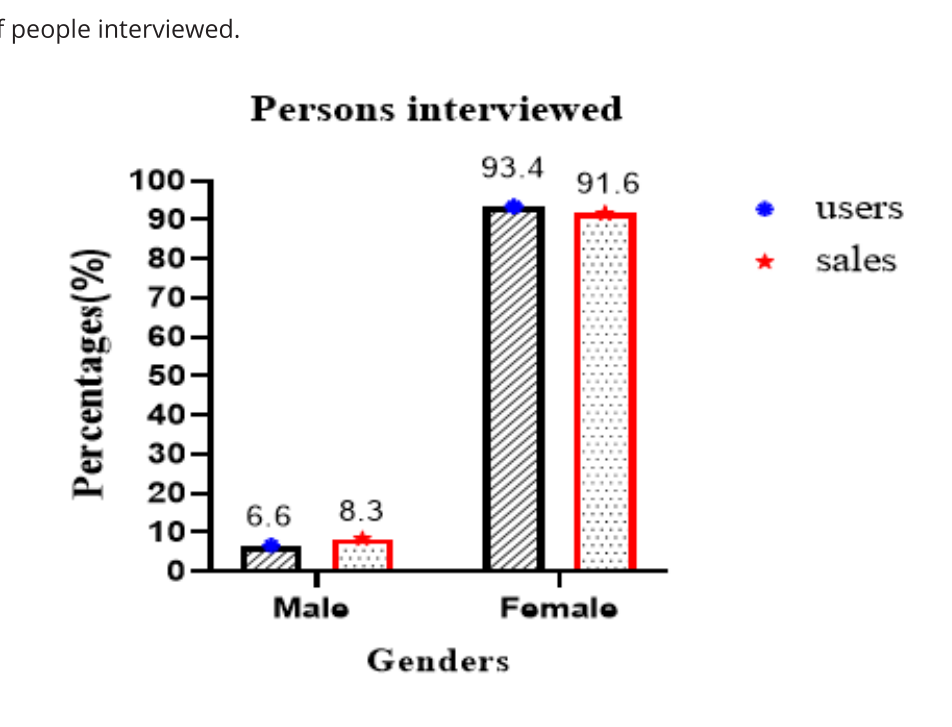
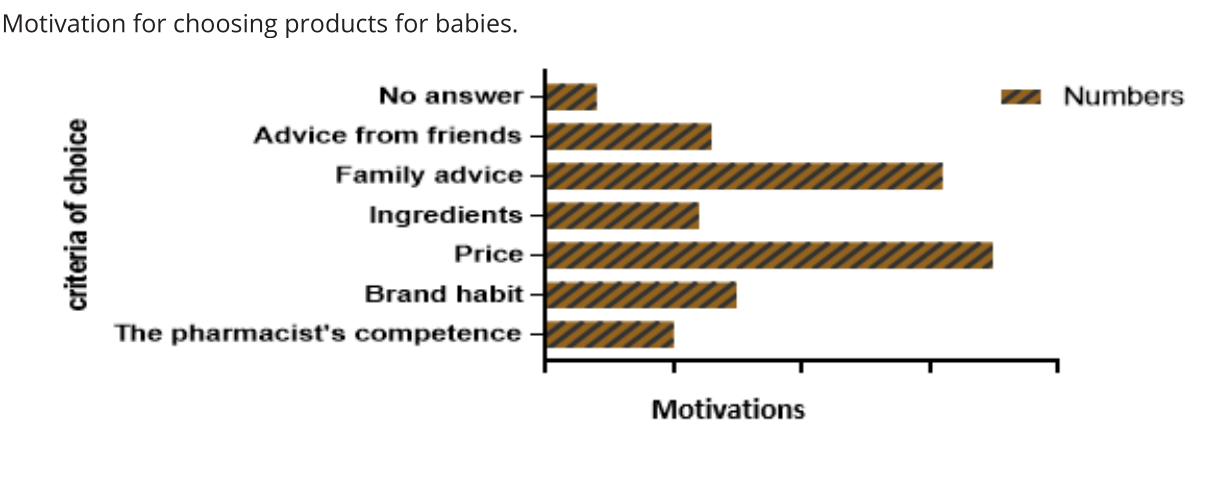
Survey results People interviewed A total of 91 users were interviewed, including 85 women (93.40%) and 6 men (6.60%), and 12 salespeople, including 11 women (91.66%) and 1 man (8.33%), were asked about the use of toilet milks in the town of Dschang, as well as the top-selling products. This enabled us to identify 19 brands of baby toilet milks used in Dschang and 13 top-selling products, but only 4 products caught our attention due to their high percentages in terms of use and sales. Figure 1 opposite shows the percentages of respondents. Figure 1. Number of people interviewed. Motivation for purchasing cosmetics Of the 19 products surveyed, price was the main motivation for users to buy cosmetics.
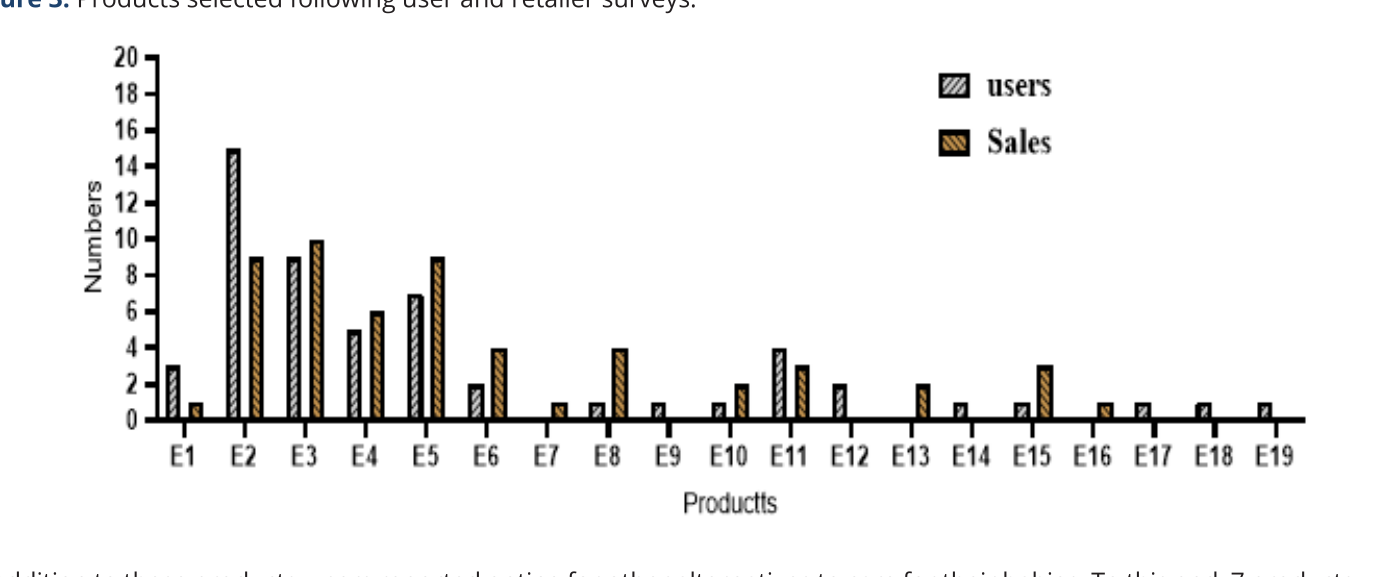
Local products took the lion’s share of the market in Dschang, to the detriment of imported products. Figure 2 opposite shows the different product motivations. Figure 2. Motivation for choosing products for babies. Products counted during the survey Figure 3. below shows the best-selling and most-used pro- ducts in the town of Dschang; the figure shows a total of 19 products that are generally encountered, and we can see that E2, E3, E4 and E5 are the most widely used. Sellers also declared that these products were in constant demand from users. Figure 3. Products selected following user and retailer surveys. In addition to these products, users reported opting for other alternatives to care for their babies.
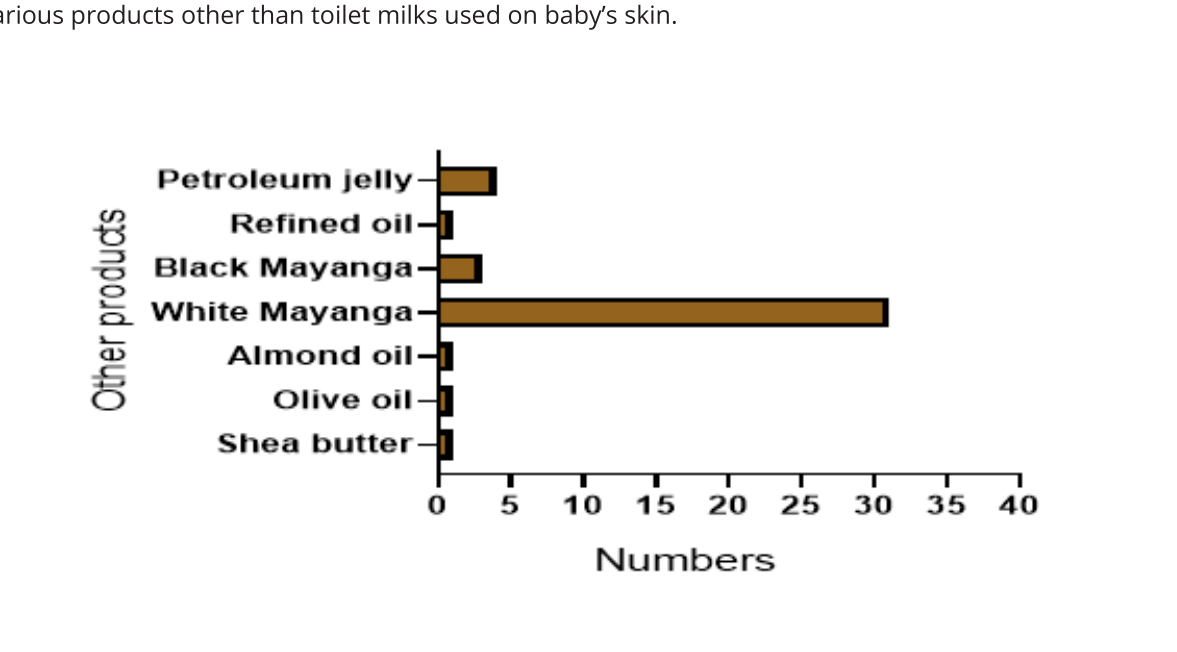
To this end, 7 products were identified: 6 natural substances and one synthetic product, Vaseline (4.4%). Of the 91 people surveyed, 31 (34.07%) said they used white palm kernel oil (commonly known as white mayanga), 3.3% used black palm kernel oil (commonly known as black mayanga) and a total of 4.40% used olive oil, almond oil, refined oil and shea butter. In addition, 4 out of 12 vendors reported selling white palm kernel oil constantly. Figure 4 opposite shows the other products generally used by consumers. Figure 4. Various products other than toilet milks used on baby’s skin. This figure shows that white mayanga is the product most appreciated by consumers because of its nature and cost.
Control of toilet milk labelling One hundred percent (100%) of the milks inspected did not comply with labelling requirements The main discrepancies represented on each of the toilet milks were the absence of mandatory labelling information, incomplete ingredient lists, special precautions for use and nominal content. pH measurement Figure 5 below shows the pH values obtained for the 4 toilet milks. Toilet milks E1 and E5 oscillate within the normal pH values (4 to 6) recommended for children. Samples E3 and E4 are outside the norm. The results show a compliance and noncompliance rate of 50%. Microbiological control Microbiological conformity was 100% for all body lotions on Mueller Hinton agar, as was the absence of pathogenic germs specific to each microorganism on different culture media (Table 1).
This provides valuable information on the sterility conditions under which these products were manufactured and stored. Toxicity control in vivo skin irritation test (Draize test) The effect of toilet milks on the skin was assessed by skin irritation tests in rats. Topical application of the different milks revealed no irritation effects (absence of edema, erythema and eschar) on the animal’s skin after 72 h post-application. Their primary irritation index (PI) was 0 for all milks: these products are considered non-irritating for the skin according to the primary irritation index. In vivo eye irritation test (Draize test) Application of the cosmetic milks to the eyeball, followed by clinical examinations of the conjunctiva (for the presence or absence of redness), lacrimation, chemosis and cornea (by assessing the degree of opacity, surface area and ulceration), showed that the milks had an ocular irritation effect after 1 hour of application, with a total reduction after 48 hours post-application Their maximum eve irritation indexes defined each product as a low irritant, in view of the precautions for use on the product label (ES), and considered it compliant (Table 1).
Table 1. Summary of body lotions compliance Product Labeling pH M.C Skin irritation test Eye irritation test E2 NC C C C NC E3 NC NC C C NC E4 NC NC C C NC E5 NC NC C C C M.C: microbiological control ; NC : non-compliant ⤢ view in PDF
Discussion
At the end of the survey we found 19 brands of baby toilet milk used in Dschang, and 13 body lotions were found to be the best- sellers, reflecting their wide availability on the market. According to the General Directorate for Competition policy, consumer Affairs and Fraud Control (DGCCRF), cosmetics labelling meets regulatory requirements designed to protect consumers and provide them with fair and transparent information. The results of the labelling control showed 100% non-compliance after analysis, which would be due to negligence on the part of the manufacturer. These results are similar to those of Kenfack et al. (2019), who found 100% non-compliance in the labelling of baby wipes, showing the absence of compulsory information, abuse of language, lack of batch number and an incomplete list of ingredients.
According to some researchers, pH assessment can be used to predict the risk of developing irritant contact dermatitis (Nieradko-Iwanicka et al., 2018). For the 04 samples analyzed, 02 pro- ducts had a pH value within the range (4 to 6), i.e. 50% compliance versus 50% non-compliance. This result can be explained either by poor product quality or poor storage conditions during transport and packaging at points of sale. These results differ from those of (Nieradko-Iwanička et al., 2018) who showed that of the 62 product samples tested. 5 products had a pH between 6.01 and 6.51. The majority of samples tested (57) were within the pH range (4 to 6) of the skin, i.e.
91.93% compliance and 8.07% non-compliance; similarly, Kenfack et al. (2019) showed 71.43% pH compliance within the reference range (4.5 and 6) versus 28 57% noncompliance. Thus, the pH of topical formulation or cosmetics must be adjusted close to physiological pH to avoid skin irritation (Tan et al., 2022). Similarly, an inappropriate pH can impair immunity and contribute to skin infection (Nieradko- Iwanicka et al. 2018). There is a threshold limit for micro-organisms in cosmetic products that can be handled by the skin (Almukainzi et al., 2022). According to the Scientific Committee on Consumer Safety (SCCS) “Notes of Guidance for Testing of Cosmetic Ingredients and Their Safety Evaluation”, microbial counts must not exceed 100 CFU/g or mL for products intended for children under 3 years of age, or for products intended for use around the eyes or mucous membranes.
Microbiological control results showed no presence of contaminants in the samples tested. These results differ from (Abu Shaqra and Al- Groom, 2012) who showed at 56% of items purchased at a retail outlet were free from microbial contaminants and 5% contained less than 102 UFC/1g, 1e a total of 61% of products tested and found to comply with specifications Studies by (Kenfack et al., 2019) also revealed that 71.43% of samples tested complied with Good Manufacturing Practice (ISO 22716). This is all the more important given that microbiological quality is a requirement, and there are still numerous control points. It is therefore essential to follow Good Manufacturing Practices (GMP) and recommendations, in particular those set out in ISO 22716 (Khodheir, 2020).
Skin irritation is characterized by the appearance of reversible lesions on the skin (OECD, 2015). Toxicological tests demonstrated that the milks were non-irritating to the skin. These milks can be safely used by consumers. Eye application results showed milks classified as mildly irritant. The appearance of ocular manifestations, following the application of single doses of toilet milks, results in the onset of an irritant reaction.Irritantcontactconjunctivitisfol-lowsexposureofthe ocular mucosa to irritant agents (Dalibon, 2014). A very large number of allergens are involved: preservatives, surfactants, fragrances, excipients, sunscreens.... (Collet et al., 2011). In an unpublished report cited by CSAS, Report No: 83/143 signs of eye irritation were observed after exposure to undiluted phenoxyethanol in vivo, in three rabbits.
However, further evidence to confirm this conclusion is currently unavailable (Agrawal et al., 2022). Parabens are preservatives with low allergen city, and their potential carcinogenic effect, the subject of recent controversy, does not appear to have been demonstrated (Collet et al., 2011). Fragrance components and preservatives are the most common cosmetic con- tact allergens; however, all ingredients should be considered as potential culprits and tested (Goossens and Lepoittevin, 2003). Careful reading of labels, in particular for the presence of prohibited ingredients likely to cause irritant reactions, or indications concerning special precautions for use, are therefore essential for consumer health.
Conclusion
It is important to ensure the quality of cosmetic products, from their formulation to their transport and preservation at point of sale. Regulatory authorities are required to enforce strict legislation on the manufacture of cosmetics, in order to assess and guarantee their quality and safety before they reach consumers. These authorities should also raise awareness of the need to read and respect precautions when using cosmetics. Conflicts of Interest There were no conflicts of interest. Author Contributions In this research project, all authors played integral roles across every phase of the work. Their contributions encompassed refining the manuscript’s content to ensure clarity, coherence, and accuracy, as well as meticulously editing the language for consistency and readability.
Additionally, they diligently verified data and references, enhancing the overall structure and flow of the document. Funding No funds were available. Acknowledgments We extend our heartfelt gratitude to the University of Dschang, the baby body lotions sellers in the city of Dschang for their invaluable support and for their significant contributions to this research endeavour
Figures and Tables
References
- Abu Shaqra, Q. M., & Al-Groom, R. M. (2012). Microbiological quality of hair and skin care cosmetics manufactured in Jordan. International Biodeterioration & Biodegradation, 69, 69-72: https://doi.org/10.1016/j biod 2011.12.009
- Agrawal, A., Pandwar, U., & Pandya, N. (2022). Are Phenoxy- ethanol products safe for babies? - A review of current evi- dences. Indian Journal of Child Health, 65-67 https://doi.org/10.32677 jch 915.3465
- Almukainzi, M., Alotaibi, L., Abdulwahab, A., Albukhary, N., & El Mahdy, A. M. (2022). Quality and safety investigation of commonly used topical cosmetic preparations. Scientific Reports, 12(1), 18299.
- Beylot, G. (2012). Cosmetics suitable for infants. Actualités Pharmaceutiques, 51(515), 53- 56. https://doi org/10.1016/S0515-3700(12)71288-0
- Benmeriem, R., Iteb, M., & Sefha, F. (2021). Formulation of a sucroester-type nonionic surfactant-stabilized emulsion for cosmetic application. http://dspace.univmedea.dz/handle/123456789/4505
- Collet, E., Castelain, M., & Milpied, B. (2011). Eye, eyelids and contact allergens. Revue Française d’Allergologie, 51(3),318-322. https://doi.org/10.1016/j.reval 2011.01.045
- Dalibon, P. (2014). From the eyelids to the optic nerve, various eye conditions. Actualités Pharmaceutiques, 5539), 16-23. https://doi.org/10.1016/j.actpha 2014.08.005
- Ekom, S. E., Tamokou, J-D.-D., & Kuete, V. (2021). Antibacterial and Therapeutic Potentials of the Capsicum annuum Extract against Infected Wound in a Rat Model with Its Mechanisms of Antibacterial Action BioMed Research International
- Goossens, A., & Lepoitevin, J. P. (2003). Contact allergy to cosmetics and perfume components: Novel clinical, chemical and diagnostic aspects. Revue Française d’Allergologie et d’Immunologie Clinique, 43, 294-300. https://doi.org/10.1016/S0335- 7457(03)00116-3
- Ibegbulam-Njoku, P., & Chinenye C., C.-O. (2016) Microbiological evaluation of cosmetics products sourced in Aba city, Nigeria International Journal of Scientific Re- ports, 2, 74. https://doi.org/10.18203/issn.2454-2156 IntJSciRep20161273
- Kenfack, R. S., Mballa Rose, N., Nguidjoe, M. E., Libam, P., Mahi, L., Tsafack, E., Manon, A. S., & Piccerelle, P. (2019). Quality control of cosmetics case of baby wipes s.pdf Pharmacy & Pharmacology International Journal, 7(2). https://doi.org/10.15406/ppij 2019.07.00237
- Kerbirio, L. (2018). The future of certified organic cosmetics in France. Khodheir, N. (2020). Evaluation du risque microbiologique de certains produits cosmétiques ‘Cas des shampoos’ [Thesis, UNIVERSITE KASDI MERBAH OUARGLA]. http://dspace.univ-ouargla dz/jspui/handle/123456789/24877
- Klotoė, J. R, Dougnon, T. V, Koudouvo, K. Ategbo, J. M., Loko, F., Akoègninou, A., Aklikokou, K., Isamane, K., & Gbeassor, M. (2013). Ethnopharmacological survey on antihemorrhagic medicinal plants in South of Benin European Journal of Medicinal Plants, 3(1), 40.
- Kowalska, M., Zbikowska, A., Woźniak, M., & Amanowicz, A. (2022). Quality of Emulsions Based on Modified Watermelon Seed Oil, Stabilized with Orange Fibres. Molecules, 27(2), Article 2. https: /doi.org 10.3390 molecules27020513
- Nieradko-Iwanicka, B., Chrobok, K., Skolarczyk, J., & Pekar, J. (2018). What is the pH, Fe and Cl content of cosmetics we use? -a pilot study on safety of skin care products. Polish Journal of Public Health, 127(2), 78-81.
- OECD (2015). Test n° 404: Acute irritant/corrosive effect on the skin | en | OECD. https://www.oecd.org/fr/env/ essai-n-404-effet-irritant-corrosif-aigu-sur-la-peau- 9789264242685-fr.htm
- OECD (2021). Test n° 405: Acute irritant/corrosive effect on the eyes | en | OECD. https://www.oecd.org/fr/env/ essai-n-405-effet-irritant-corrosif-aigu-sur-les-yeux- 9789264185548-fr.htm
- Plainfossé, H. (2019). Research and development of innovative cosmetic ingredients promoting skin repair from natural raw materials of Mediterranean origin [Phdthesis, COMUE Université Côte d’Azur (2015-2019)]. https://theses hal.science/tel- 02879832
- Tan, P. L., Rajagopal, M., Chinnappan, S., Selvaraja, M., Leong, M Y., Tan, L. F., & Yap, V-L. (2022). Formulation and Physicochemical Evaluation of Green Cosmeceutical Herbal Face Cream Containing Standardized Mangosteen Peel Extract. Cosmetics, 9. https://doi org/10.3390/cosmetics9030046
This is a text version generated from the article. For the formatted version of record (with original tables & figures), download the PDF →