Full Text Hide / show
Introduction
The radiation oncology program at Children’s Hospital of Los Angeles (CHLA) offers advanced radiation therapy with photons with a wide range of treatment modalities and techniques such as total body irradiation, stereotactic body radiation therapy or stereotactic radiosurgery with image guidance. The patient’s diagnosis and location of tumor, among other factors, may determine the type of radiation therapy offered to patients. Some patients are referred to outside proton therapy centers if the clinical indication is present since CHLA does not offer proton therapy. Access to proton therapy is challenging because it is not available in Los Angeles County and may be difficult based on socioeconomic factors as proton therapy has a higher treatment cost than photon therapy (2, 4, 8, 9).
In prior work that investigated patterns of care between photon and proton therapy recipients, potential racial and socioeconomic disparities in accessibility of proton therapy were identified. Bitterman et al. published in JAMA using data from the Children’s Oncology Group (COG) trials to explore if racialandsocioeconomicfactorswereassociatedwithpatients who chose proton therapy. They found that black pediatric patients were least likely to receive proton therapy, and that patients who were more likely to receive proton therapy traveled farther distances for treatment (2). This pattern was corroborated by a subsequent study by Nogueria et al. which utilized the National Cancer Database to also conclude that black patients faced lower odds of receiving proton therapy than white patients.
The disparities were most pronounced for cancers where proton therapy was recommended as the preferred radiation modality. Moreover, Shen et al. highlighted socioeconomic factors that influence proton therapy utilization. Their evaluation of 12,101 children in the National Cancer Database showed that patients with private/managedcare were more likely to receive therapy compared to those with Medicaid or no insurance. Furthermore, they also observed a higher median household income and education level correlated with increased proton therapy use. In addition, Oncol et al. underscored the global nature of these socioeconomic disparities in studying data from the Particle Therapy Co-Operative Group. The findings revealed a significant inequality in accessibility of proton therapy centers across various counties.
On the international level, countries with higher total GDP and GDP per capita tended to have a higher number of proton therapy centers indicating that economic development affects accessibility of proton therapy. We aimed to build upon the previous work and add to our existing dataset using a retrospective chart review encompassing the years 2000-2022 to obtain granular geographic information by utilizing the University of Wisconsin’s Area Deprivation Index (ADI) and obtain more specific proxies of socioeconomic status such as insurance type and the characteristics of a patient’s home. We utilized the ADI to obtain more data on our individual patientsasitcreatesanindexnumberbaseduponthepatient’s home residence and census block group neighborhood. The index considers various socioeconomic factors such as median family income, unemployment rate, and education (1).
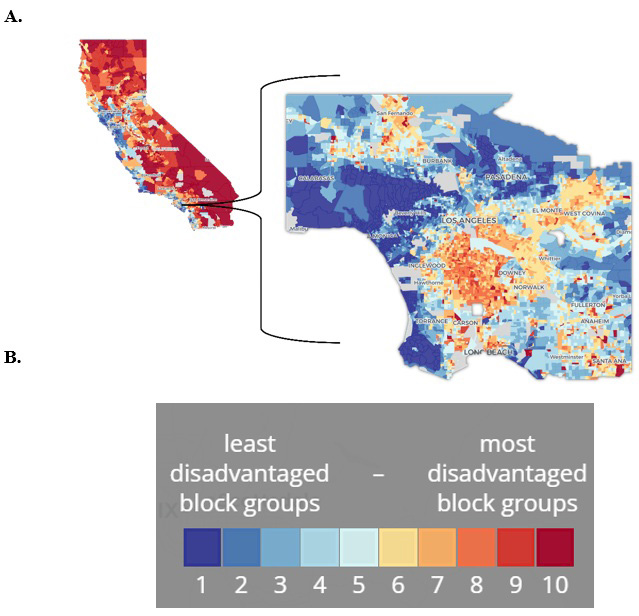
The ADI generates two scores for each particular location, which allows for the comparison of disparity on the federal level (scale of 1-100) and on the state level (scale of 1-10). A higher score indicates a higher level of disadvantage. The ADI can be a useful tool for predicting the level of care needed, as patients coming from higher disadvantaged areas tend to need more intensive care (10). Additionally, we intended to build upon our prior abstract by delving into other factors or barriers that may pose limitations to a patient’s access to proton therapy, such as distance to CHLA, insurance type and home size.
Methods
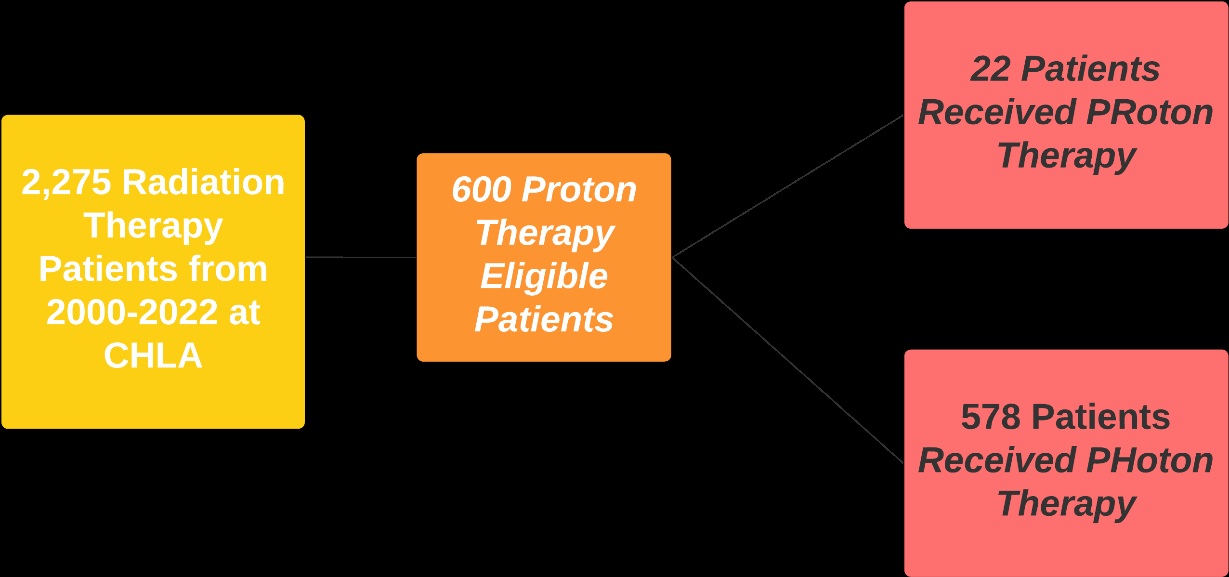
Building the Database Approximately 2,275 pediatric patients presented to the Radiation Oncology Program at CHLA from 2000 to 2022. A retrospective chart review was conducted to build a patient database, which included demographic, insurance, and clinical information such as date of earliest radiation treatment, primary diagnosis and utilization of concurrent chemotherapy.Outofthe2,275patients,600pediatricpatients presented with diagnoses that are typically eligible for proton therapy referral. To assess socioeconomic barriers, we used patient addresses to determine the state decile and national percentile of deprivation using the ADI. In addition to the ADI, Google Maps was used to calculate the driving distance of the patient’s home to CHLA. Public database websites, such as Redfin and Zillow, were used to determine if the patient lived in a single-family home or a multi-family home and the square footage of the home was recorded for single-family homes.
A further chart review was conducted to investigate a patient’s primary language and their religion, if any. Data Analysis A univariate logistic regression model was generated by the CHLA biostatistics group to compare variables across the proton therapy group versus photon therapy group.
Results
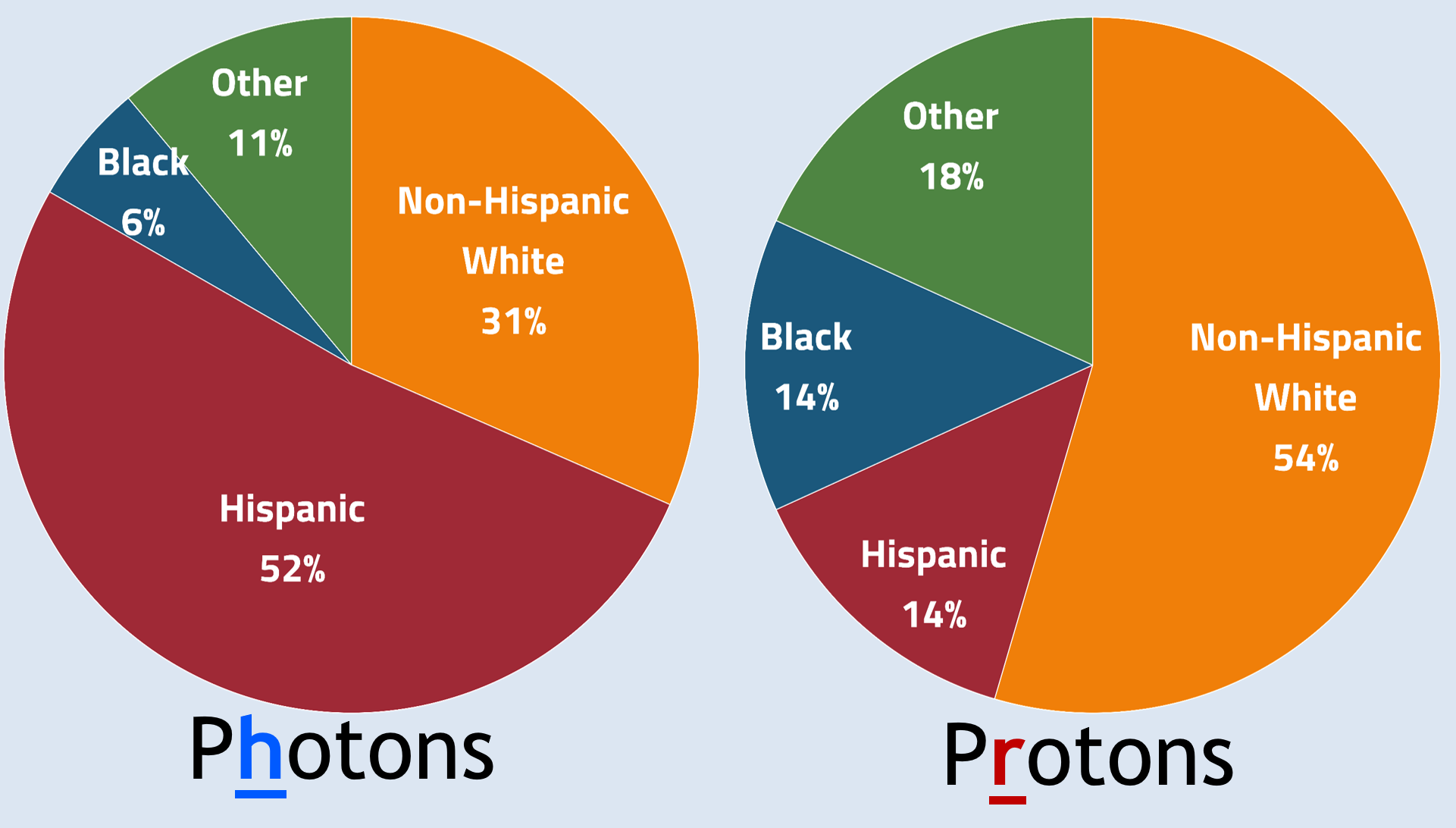
In our cohort, from the years 2000-2022, 578 patients received photon therapy and 22 patients received proton therapy. The racial demographic breakdown for the photon cohort was 31.83% non-Hispanic white patients (p-value=0.036), 51.90% Hispanic patients (p-value =0.000), 5.19% Black patients, and 10.73% patients in the Other category (i.e., Asian). In contrasting, the racial demographic breakdown for the proton cohort was 54.55% non-Hispanic white patients (p-value=0.036), 13.64% Hispanic patients (p-value =0.000), 13.64% Black patients, and 18.18% patients in the Other category (i.e., Asian). The median ADI, both on the state and national level, was higher in the photon cohort. For the photon cohort, the median state ADI decile was 6 and the national ADI percentile was 16.
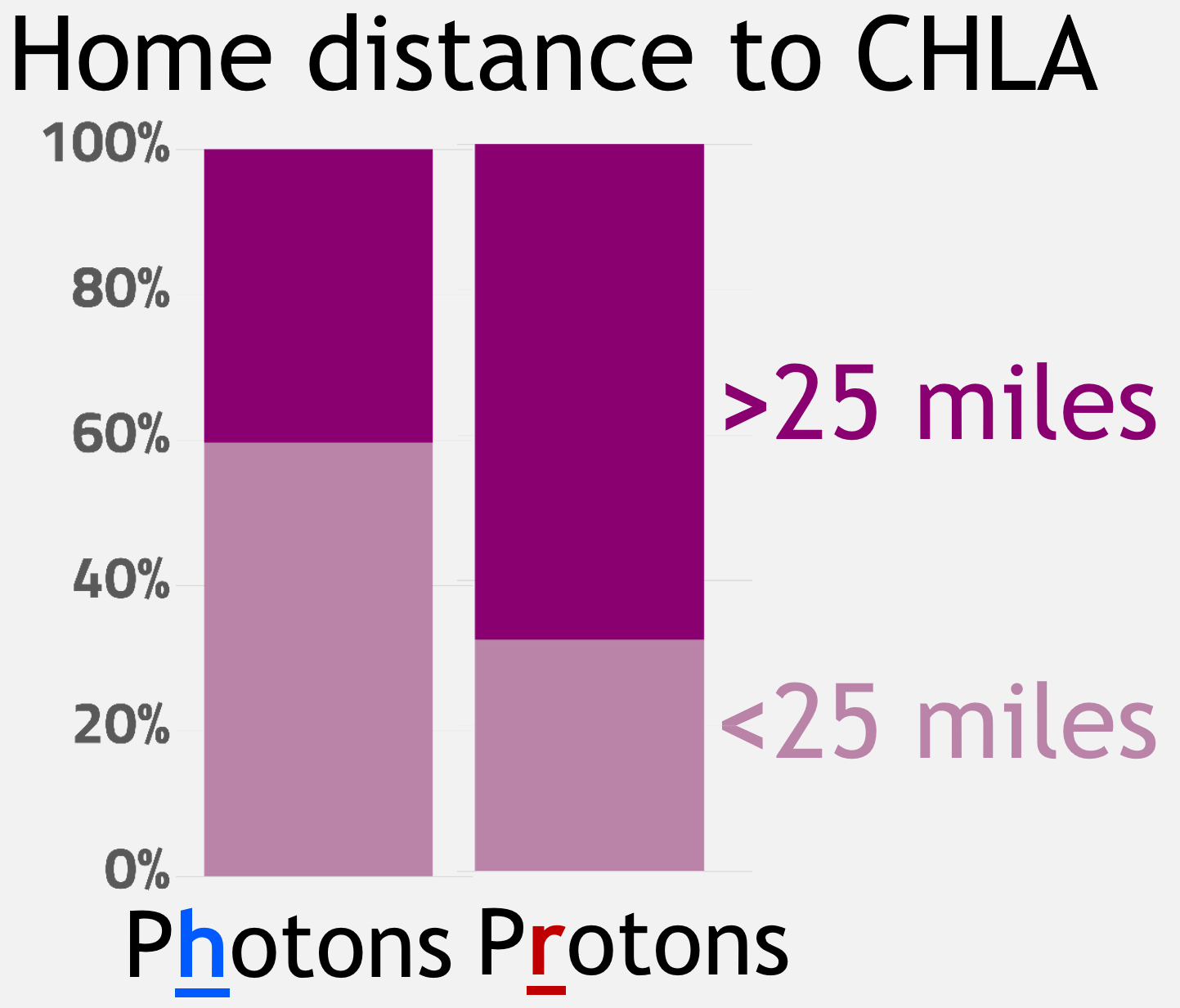
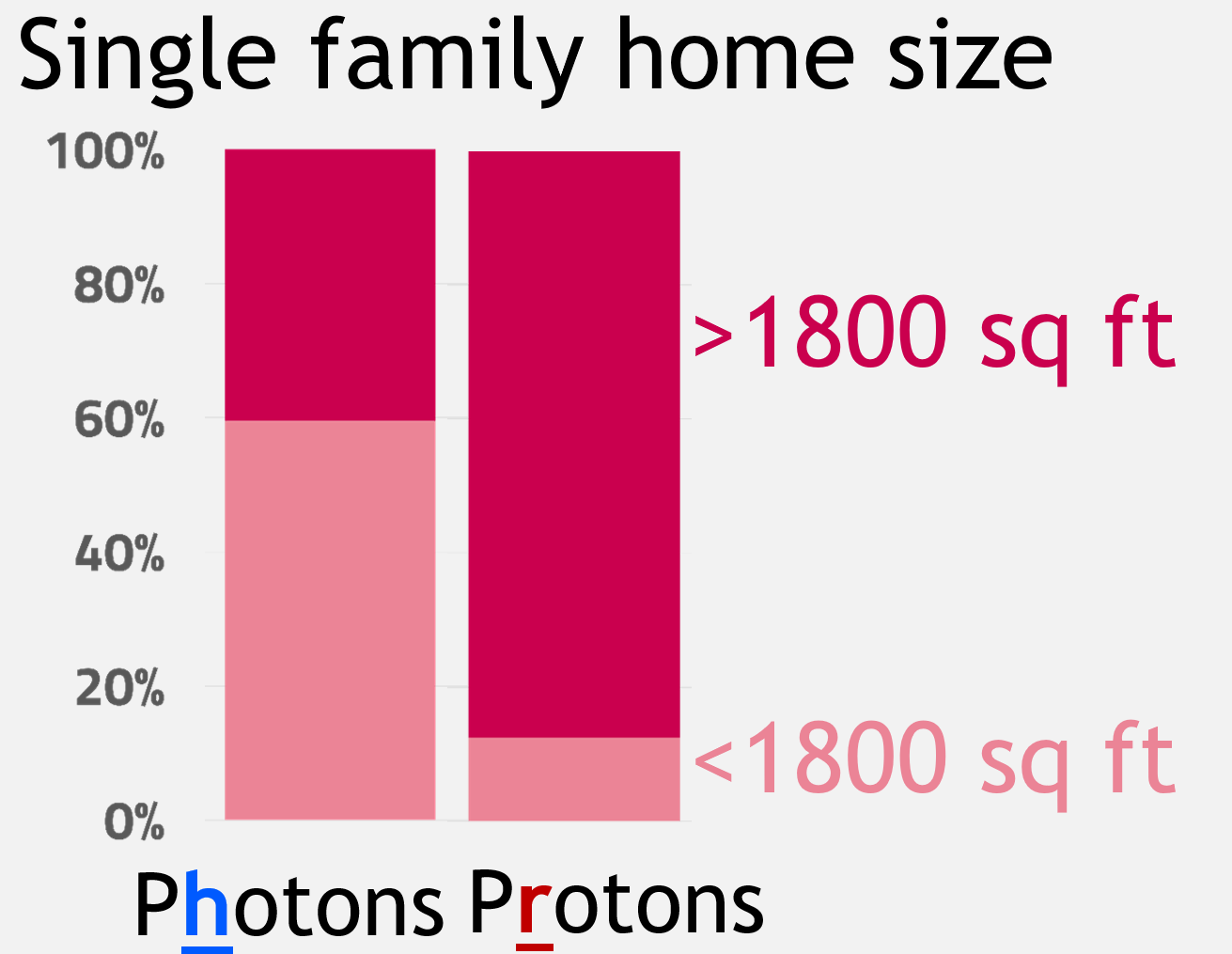
The state ADI decile and national ADI percentile for the proton cohort was 3 and 9, respectively. Patients who lived in larger homes were 4.28 times more likely to receive proton therapy. In the proton cohort, 63.64% (p-value =0.000) of patients lived in home sizes greater than 1800 sq. ft. In the photon cohort, 42.63% (p-value =0.000) of patients lived in multi-family homes (such as apartments) rather than single-family homes. As for distance away from CHLA, 59.52% (p-value =0.014) of the photon therapy cohort lived less than 25 miles from CHLA and 31.82% (p-value =0.014) of the proton cohort lived less than 25 miles from CHLA. The majority of the proton population lived greater than 25 miles away from CHLA and they were 3.15 times more likely to receive proton therapy than photon therapy.
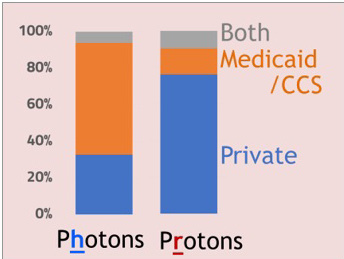
The majority of the patients spoke English as their first language in both photon and proton therapy cohorts; however, the proton therapy cohort had a higher percentage of 77.2% (p-value =0.019) of patients who spoke English compared to 70% for photon therapy patients. In the photon cohort, patients with private insurance were the minority as 38.41% had private insurance with 66.09% of patients insured by MediCal and 61.76% eligible for coverage under California Childrens’ Services (CCS). Within the proton therapy cohort, patients with MediCal were in the minority, as 81.82% (p-value =0.000) of patients utilized private insurance, while 22.73% (p-value =0.000) of patients used MediCal and 13.64% (p-value =0.000) of patients used MediCal and CCS combined.
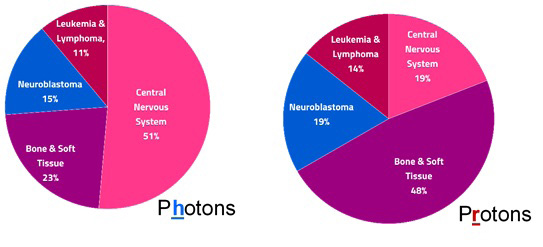
Patients with private insurance were 7.22 times more likely to receive proton therapy compared to photon therapy. Patients with MediCal were 85% less likely to opt for proton therapy and patients with MediCal and CCS combined were 91% less likely to opt for proton therapy. For primary diagnosis, the photon cohort had 51.73% (p-value =0.002) of patients with CNS tumors and 22.32% (p-value =0.019) of patients with sarcomas. The proton cohort consisted of 18.18% (p-value =0.002) of patients with CNS diagnoses and 45.45% (p-value =0.019) of patients with sarcomas. Figure 1. University of Wisconsin ADI Map (A) State of California with a Zoom-in of Los Angeles County (B) State-Only Decile Scale.
Discussion
CHLA serves a diverse patient population, in terms of racial background, socioeconomic status, and geographic distribution. We previously studied patterns of care at CHLA from 2000-2020. In our abstract presented by McKinnon et al., the radiation therapy patient population is predominantly Latino or Hispanic (53.7%); however, the patient population that received proton therapy over the study period was 15.4% Latino or Hispanic. As our patient population draws mostly from Southern California, our analysis has significant socioeconomic and racial differences from the group studied by Bitterman et al. Our study may shed light on the demographic differences between various regions of the United States. This data provides more granular information on which specific populations were more likely to have proton therapy as compared to photon therapy.
Non-Hispanic white patients were 1.71 times more likely to receive proton therapy while Hispanic patients were 85% less likely (0.146 times likely) to receive proton therapy. Based on these results, patients who were more likely to travel outside of Los Angeles County to receive proton therapy tended to be of non-Hispanic white racial background, lived in larger single-family homes, had a lower median ADI on both the state and national level, and also had private insurance. The lower median ADI may reflect less socioeconomic disadvantage based on the factors of median household income, employment rates, and housing conditions within the address block of where the patient lived. Living in a larger home and having private insurance may potentially indicate increased financial security.
Overall, further research and granular data must be studied to assess this potential for disparity within photon and proton cohorts. Limitations of this study included lack of access to direct measures of socioeconomic standing such as exact household incomes, data based on a small samples size for the proton therapy cohort and may lack representation of national demographics as this research was conducted in Southern California. Patterns of care were also significantly altered during the global COVID-19 pandemic as travel may have been initially restricted. De Leo et. al indicated a significant decrease in the proportion of patients traveling to “destination facilities,” specialized high-volume centers known for providing comprehensive cancer care.
This led to adjustments in care strategies, such as postponed noncritical visits or digital health platforms (3). While patients could receive general diagnoses at their county hospitals, transportation barriers restricted many from seeking effective radiation therapy in order to mitigate COVID-19 transmission risks. Patients residing in rural areas especially had less access to coordinated care. Later, as work-from-home became a more commonplace model, potential barriers to travel may have been lowered.
Conclusion
Studying patterns of care may potentially aid in identifying barriers that patients may face when accessing certain forms of treatment. Additionally, understanding which patient populations may select a certain form of treatment may allow health care professionals to create more individualized treatment plans that are best use of the patient’s resources and best align with patient’s goals. This study may be used in aiding health care professionals and policy makers in designing protocols to decrease barriers. Acknowledgements Elaijah Islam was a fellow in the USC/CHLA Summer Oncology Research Fellowship Program, supported in part by a National Cancer Institute R25 grant CA225513, the Norris Comprehensive Cancer Center in Los Angeles, Children’s Hospital Los Angeles, Concern Foundation for Cancer Research, and Tri Delta.
Figures and Tables
References
- Odei B, Frandsen JE, Boothe D, et al. Patterns of Care in Proton Radiation Therapy for Pediatric Central Nervous System Malignancies. Int J Radiat Oncol Biol Phys. 2017;97:60–63.
- Shen CJ, Hu C, Ladra MM, et al. Socioeconomic factors affect the selection of proton radiation therapy for children. Cancer. 2017;123:4048–4056.
- Rivera A, Ohri N, Thomas E, et al. The Impact of COVID-19 on Radiation Oncology Clinics and Patients With Cancer in the United States. Adv Radiat Oncol. 2020;5:538–543.
- Bitterman DS, Bona K, Laurie F, et al. Race Disparities in Proton Radiotherapy Use for Cancer Treatment in Patients Enrolled in Children’s Oncology Group Trials. JAMA Oncol. 2020;6:1465–1468.
- Nogueira LM, Sineshaw HM, Jemal A, et al. Association of Race With Receipt of Proton Beam Therapy for Patients With Newly Diagnosed Cancer in the US, 2004-2018. JAMA Netw Open. 2022;5:e228970.
- Xia Z, Wang J, Xia J, et al. Inequality in Accessibility of Proton Therapy for Cancers and Its Economic Determinants: A Cross-Sectional Study. Front Oncol. 2022;12:876368.
- Chen Z, Dominello MM, Joiner MC, et al. Proton versus photon radiation therapy: A clinical review. Front Oncol. 2023;13:1133909.
- De Leo AN, Giap F, Culbert MM, et al. Nationwide changes in radiation oncology travel and location of care before and during the COVID-19 pandemic. Radiat Oncol J. 2023;41:108–119.
- McKinnon SP, Kazmierczak ZI, Olch AJ, et al. Abstract B087: Disparities in pediatric patients receiving proton therapy during the COVID-19 pandemic - A single institutional experience. Cancer Epidemiology, Biomarkers & Prevention. 2023;32:B087–B087.
- Aguirre AO, Lim J, Baig AA, Ruggiero N, Siddiqi M, Recker MJ, Li V, Reynolds RM. Association of area deprivation index (ADI) with demographics and postoperative outcomes in pediatric brain tumor patients. Childs Nerv Syst. 2024 Jan;40(1):79-86. doi: 10.1007/s00381-023- 06098-6. Epub 2023 Aug 7. PMID: 37548660
This is a text version generated from the article. For the formatted version of record (with original tables & figures), download the PDF →