Full Text Hide / show
Introduction
Platelet-rich plasma (PRP) formulations began to be described in the biomedical literature during the 1980s, characterized as plasma concentrates containing platelet levels higher than those found physiologically in peripheral blood. Initially, their application was related to hematology and transfusion processes; however, over the past few decades, the use of PRP has progressively expanded to different medical specialties, including dermatology, plastic surgery, ophthalmology, gynecology, oral and maxillofacial surgery, and, above all, orthopedics and sports medicine (ASSAGGAF et al., 2021; HOGAN et al., 2021; COTTOM; VERDONI, 2025). Currently, PRP represents one of the most extensively studied biological therapies in the management of musculoskeletal disorders, particularly in osteochondral injuries of the ankle and talus, due to its potential to stimulate regenerative mechanisms and modulate the local inflammatory process (WOO; PARK; SEOK, 2023; HALAYQEH et al., 2025; DING et al., 2024).
Recent studies demonstrate growing scientific interest in the use of orthobiological therapies for foot and ankle pathologies, particularly in osteochondral lesions of the talus, ankle osteoarthritis, and degenerative tendinopathies (PAGET et al., 2023; LAOHAJAROENSOMBAT et al., 2023). The biological effects of PRP stem primarily from the release of bioactive molecules stored in platelet alpha granules. Among these substances, platelet-derived growth factor (PDGF), vascular endothelial growth factor (VEGF), transforming growth factor beta (TGF-β), insulin-like growth factor (IGF), as well as interleukins and metalloproteinases related to tissue repair mechanisms (ARTHUR VITHRAN et al., 2023; YANG et al., 2025). Thesemoleculesactdirectlyonangiogenesis,cellproliferation, mesenchymal stem cell recruitment, and extracellular matrix remodeling, promoting the regeneration of injured tissues (TABET, 2025; MIGLIORINI et al., 2022a).
PRP offers significant advantages as it is an autologous and minimally processed product, reducing potential immunological risks and facilitating its clinical adoption. This characteristic has facilitated its rapid adoption in minimally invasive orthopedic procedures and in regenerative protocols associated with arthroscopy and osteochondral microfractures (DANILKOWICZ et al., 2022; WALTHER et al., 2023). At the same time, advances in bone and cartilage regenerative therapies have fueled interest in biomaterials associated with PRP, including bone marrow aspirate concentrate and mesenchymal cell therapies (BACHIR et al., 2023; TABET, 2025). Despite the growing clinical popularity of PRP, the scientific literature still shows mixed results regarding its definitive efficacy. Recent systematic reviews highlight significant methodological discrepancies among published studies, including differences in centrifugation protocols, activation, platelet concentration, leukocyte composition, and the number of applications performed (BUTLER et al., 2025; SEOW et al., 2022).
This methodological variability hinders therapeutic standardization and compromises direct comparisons between clinical trials (FUCALORO et al., 2025; COTTOM; VERDONI, 2025). Commercial PRP formulations exhibit significant differences in platelet, leukocyte, and growth factor concentrations, as well as variations in the methods used to obtain and activate the biological product. Recent studies have demonstrated that leukocyte-rich PRP can induce higher expression of proinflammatory cytokines, including IL-1β, IL-6, TNF-α, and IL-8, thereby potentiating intra-articular inflammatory reactions (DING et al., 2024; MIURA et al., 2026). In contrast, leukocytepoor formulations appear to yield better clinical outcomes in certain orthopedic and joint applications, particularly in chondral and osteochondral lesions (WOO; PARK; SEOK, 2023; XIAO et al., 2025).
In the context of osteochondral lesions of the talus (OLT), PRP has been used primarily as an adjunctive therapy in conjunction with microfracture techniques, osteochondral transplants, and bone marrow stimulation. Recent systematic reviews have demonstrated that combining PRP with arthroscopic procedures can improve clinical outcomes, reduce pain, and promote higher quality of regenerated cartilage (REN et al., 2025; HUANG et al., 2024). Similarly, prospective multicenter studies have demonstrated clinical benefits of combining PRP with osteochondral repair techniques, particularly in young patients and athletes (DOĞAR et al., 2021; LI et al., 2023). LOTs are a major cause of chronic ankle pain and functional limitation, frequently associated with sports injuries, ligament instability, and rotational ankle fractures (WILLIAMSON et al., 2022; VILLELA et al., 2024).
The management of these injuries remains challenging due to the limited regenerative capacity of hyaline cartilage and the high rates of progressive joint degeneration (BRUNS; HABERMANN; WERNER, 2021; BARBIER, 2023). Several surgical techniques have been described for the treatment of these injuries, including microfractures, retrograde drilling, autologous osteochondral transplants, and allogeneic osteochondral grafts (ARTIOLI et al., 2023; VERONESI et al., 2023). Recent studies indicate that the choice of treatment depends directly on the size of the lesion, its anatomical location, the integrity of the subchondral plate, and the presence of associated instability (SAXENA et al., 2022; YOUNGER, 2023). Regarding microfracture techniques, medium- and long- term observational studies have demonstrated significant improvement in functional and radiographic outcomes following arthroscopic procedures, especially when combined with complementary biological therapies (FU et al., 2022; REN et al., 2025).
However, systematic reviews also point to high rates of complications and failures in extensive or deep lesions, reinforcing the need for additional regenerative strategies (HOLLANDER et al., 2023; CORREIA CARDOSO et al., 2024). Recent literature also highlights promising results involving autologous and allogeneic osteochondral transplants combined with PRP. Meta-analyses have demonstrated significant functional improvement, pain reduction, and greater osteochondral integration in patients undergoing transplants combined with regenerative biological therapies (FEENEY, 2022; MIGLIORINI et al., 2022b). Additionally, retrospective studies suggest benefits from the combination of PRP and iliac periosteal grafts in advanced talar lesions classified as Hepple V (XU, 2025). Other therapeutic modalities are being studied as complementary strategies in the treatment of osteochondral lesions of the ankle.
Among these, extracorporeal shock wave therapy, retrograde drilling techniques, and early postoperative weight-bearing protocols stand out (SONG et al., 2021; LI et al., 2023). Recent systematic reviews also suggest favorable outcomes with the use of adjuvant biologics combined with bone marrow stimulation, although the level of evidence remains limited (SEOW et al., 2022; RIKKEN et al., 2025). In summary, although PRP represents a biologically promising therapeutic alternative for osteochondral lesions of the talus and degenerative ankle pathologies, significant methodological gaps still exist in the current literature. The lack of standardization in preparation, application, and clinical follow-up protocols hinders definitive conclusions regarding its actual effectiveness (BUTLER et al., 2025; FUCALORO et al., 2025).
Thus, there remains a need for multicenter randomized clinical trials with greater methodological rigor and prolonged follow-up to consolidate robust evidence regarding the role of PRP in contemporary regenerative orthopedics. HYPOTHESES Main Hypothesis The use of PRP as an adjunctive therapy in the treatment of LOT associated with ankle fractures is associated with improved clinical, functional, and radiographic outcomes ( ), promoting greater osteochondral regeneration, pain reduction, and better functional recovery when compared to conventional approaches alone. Secondary Hypotheses 1. The combination of PRP with reconstructive surgical techniques, such as microfractures and bone marrow stimulation, provides better functional outcomes in patients with post-traumatic osteochondral lesions of the talus. 2. Patients treated with PRP exhibit a more significant reduction in postoperative pain, as assessed by clinical scales such as the VAS and AOFAS, compared to treatments without associated biological therapies.
3. The use of PRP promotes improved quality of regenerated cartilage and osteochondral integration observed on imaging studies, especially on MRI. 4. The use of PRP may contribute to a reduction in functional recovery time and an earlier return to daily and sports activities. 5. The clinical efficacy of PRP may vary depending on factors such as the size of the chondral lesion, the surgical technique employed, platelet concentration, and the leukocyte composition of the formulation used.
Objectives
General Objective To conduct a systematic review of the scientific literature on the use of platelet-rich plasma in the treatment of LOT associated with ankle fractures, analyzing its clinical, functional, radiographic, and biological efficacy. Specific Objectives 1. To evaluate the effects of PRP on pain reduction in patients with LOT associated with ankle fractures. 2. To compare functional outcomes between patients treated with PRP and those undergoing conventional treatments without associated biological therapies. 3. To investigate the impacts of PRP on osteochondral regeneration and the quality of repaired cartilage observed in imaging studies. 4. Analyze the main surgical techniques associated with the use of PRP, including microfractures, osteochondral transplants, and bone marrow stimulation.
5. To identify potential benefits of PRP related to functional recovery time and return to sports and work activities. 6. To evaluate the complications, limitations, and safety profile related to the use of PRP in the treatment of LOT. 7. Investigate the influence of different PRP formulations, particularly regarding platelet concentration and the presence of leukocytes, on clinical outcomes. 8. Critically synthesize the available scientific evidence, identifying methodological gaps and future prospects for the application of PRP in regenerative ankle orthopedics.
Methodology
Study Design This study is a systematic literature review conducted with the aim of critically analyzing the available scientific evidence regarding the use of PRP in the treatment of LOT associated with ankle fractures. The review was conducted in accordance with the international recommendations of the Preferred Reporting Items for Systematic Reviews and Meta-Analyses (PRISMA 2020) protocol, widely used to ensure transparency, methodological rigor, and reproducibility in systematic reviews. The PRISMA method was employed in all stages of the research, including the identification, screening, eligibility assessment, and inclusion of the selected studies. Search Strategy The literature search was conducted systematically in the following electronic databases: • PubMed/MEDLINE; • Scopus; • Web of Science; • Embase; • Cochrane Library; • Virtual Health Library (VHL); • SciELO.
Additionally, a manual search was conducted in the reference lists of the selected articles to identify potentially relevant studies not retrieved in the initial search. Controlled and uncontrolled descriptors in English were used, combined with the Boolean operators AND and OR. The main terms used included: • “Platelet-Rich Plasma”; • “PRP”; • “Osteochondral Lesions of the Talus”; • “Talar Chondral Lesions”; • “Ankle Fractures”; • “Talus Cartilage Injury”; • “Microfracture”; • “Orthobiologics”; • “Ankle Osteochondral Defects”. The search strategy was adapted specifically for each database. Example of the strategy used in PubMed: (“Platelet-Rich Plasma ‘PRP’”) AND (Osteochondral Lesions of the Talus ‘LOT’ OR “Talar Chondral Lesions”) AND (“Ankle Fractures” OR “Ankle Injury”).
Inclusion Criteria
Studies that met the following criteria were included: 1. Prospective, retrospective, randomized, or nonrandomized clinical studies; 2. Systematic reviews and meta-analyses related to the topic; 3. Studies involving patients with chondral or osteochondral lesions of the talus associated with ankle fractures; 4. Studies evaluating the use of PRP alone or in combination with surgical procedures; 5. Studies published between 2021 and 2026; 6. Articles published in English, Portuguese, or Spanish; 7. Full-text articles available. Exclusion Criteria The following were excluded: 1. Case reports and case series with very small sample sizes; 2. Experimental studies conducted exclusively in vitro or in animals; 3. Articles not directly related to LOT; 4.
Studies duplicated across databases; 5. Articles without access to the full text; 6. Publications without a clearly described methodology. Study Selection Process The selection of articles was conducted in two independent stages by previously trained reviewers. In the first stage, the titles and abstracts identified in the databases were analyzed, excluding irrelevant and duplicate studies. In the second stage, potentially eligible articles were evaluated in full, following the established inclusion and exclusion criteria. Disagreements among reviewers were resolved by consensus. The study selection process was illustrated using the PRISMA 2020 flowchart, which included the following steps: • identification; • screening; • eligibility; • final inclusion of studies. Data Extraction Data from the selected studies were extracted using a standardized form containing: • author and year of publication; • country of the study; • methodological design; • number of participants; • characteristics of osteochondral lesions; • type of associated ankle fracture; • surgical technique used; • PRP preparation protocol; • follow-up period; • clinical and functional outcomes; • complications observed; • main conclusions.
Risk of bias assessment The risk of bias in the included studies was assessed independently by two reviewers according to the design of each study. Randomized clinical trials were analyzed using the RoB 2.0 tool, observational studies using the Newcastle-Ottawa Scale (NOS), and systematic reviews using AMSTAR-2. Aspects such as participant selection, comparability between groups, outcome measurement, heterogeneity of interventions, and methodological consistency across studies were considered. The results of this assessment were used in the critical interpretation of the final synthesis. Data Synthesis and Analysis The results were synthesized in a qualitative and descriptive manner,takingintoaccountthemethodologicalheterogeneity of the included studies. The main outcomes related to the following were analyzed: • pain reduction; • functional improvement; • osteochondral regeneration; • radiographic findings; • return to activities; • complications; • safety of PRP use.
Where possible, the results of the studies were compared with one another, identifying convergences, divergences, and existing scientific gaps in the current literature. Ethical Considerations As this is a systematic review of the literature based on previously published secondary data, this study was exempt from submission to the Research Ethics Committee, in accordance with current ethical guidelines for research without direct human involvement.
Results
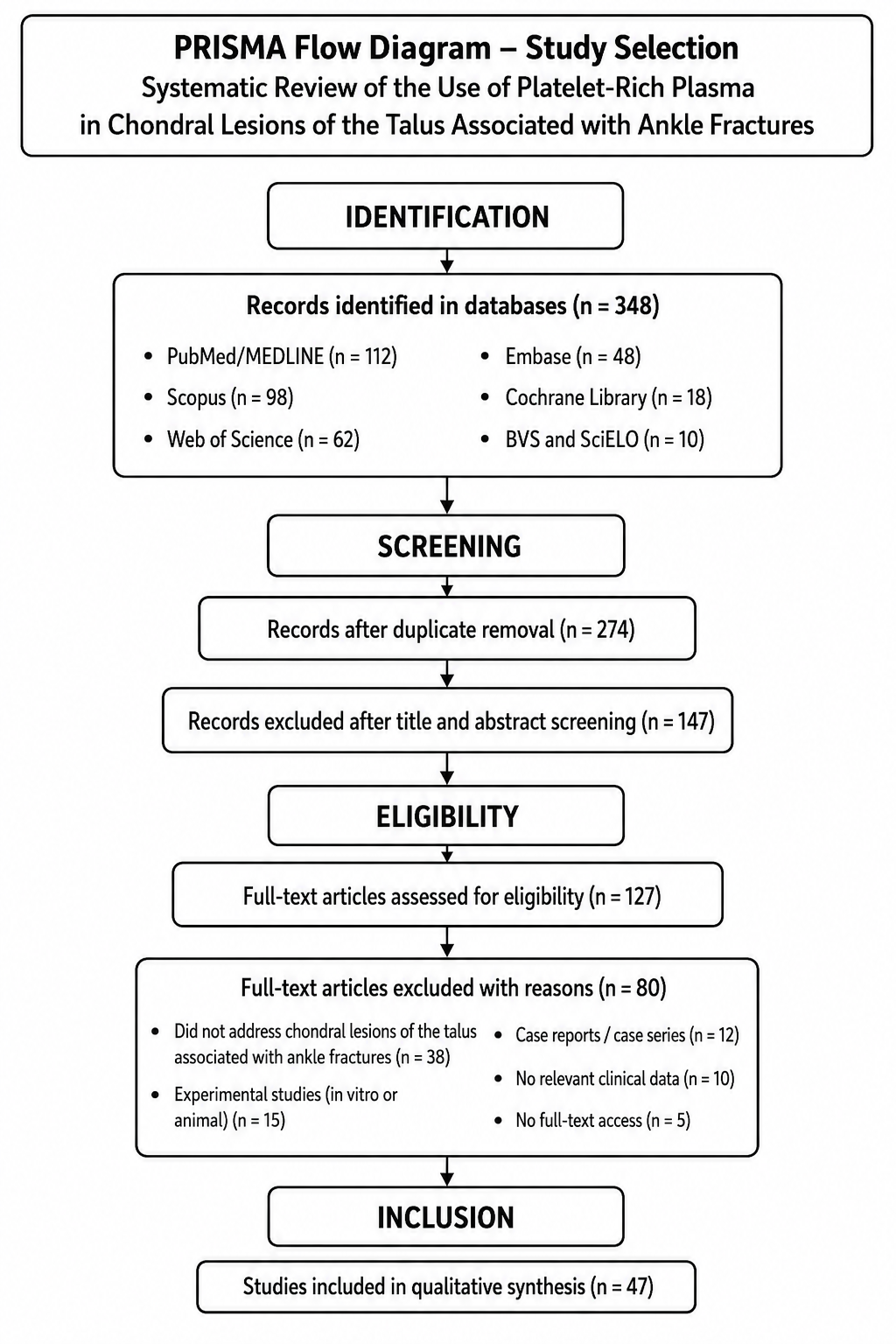
The PRISMA flowchart presented below systematically illustrates the process of identifying, selecting, assessing eligibility, and including the studies used in this systematic review on the use of PRP in LOTs associated with ankle fractures. Initially, 348 records were identified in the major international scientific databases. After removing duplicates and applying the previously established inclusion and exclusion criteria, the studies underwent screening by title and abstract, followed by a full reading of the potentially eligible articles. At the end of the methodological process, conducted in accordance with the recommendations of the PRISMA 2020 protocol, 47 studies were included in the qualitative synthesis of this review, ensuring greater scientific rigor, transparency, and reproducibility in the selection of the analyzed evidence.
Figure Source: Authors TABLE 1 presents a summary of the main studies included in this systematic review, highlighting relevant references related to the use of PRP in LOT associated with ankle fractures, as well as their main clinical, functional, and radiographic findings. Table 1. Relevant references related to the use of PRP in LOT associated with ankle fractures and their main clinical, functional, and radiographic findings. Reference Study Type Topic Evaluated Main Findings Woo et al., 2023 Meta-analysis Microfractures + PRP Functional improvement and pain reduction. Huang et al., 2024 Systematic review PRP in LOT Improved osteochondral regeneration. Ren et al., 2025 Clinical trial Medullary stimulation + PRP Superior clinical results.
Ding et al., 2024 Meta-analysis PRP in the ankle Moderate functional benefit. Halayqeh et al., 2025 Systematic review PRP for osteochondral lesions Promising results. Boffa et al., 2021 Meta-analysis Injections in the ankle Improvement in joint pain. Migliorini et al., 2022c Systematic review Cartilage defects Structural improvement of cartilage. Xiao et al., 2025 Prospective study PRP vs. hyaluronic acid PRP superior in terms of function. Li et al., 2023 Retrospective cohort Microfractures + ESWT Improved cartilage quality. Doğar et al., 2021 Randomized trial Arthroscopic treatments PRP associated with better outcomes. Saxena et al., 2022 Clinical cohort Minor talar injuries Better results in small injuries. Veronesi et al., 2023 Systematic review Retrograde drilling Favorable results with PRP.
Paget et al., 2023 Prospective cohort Ankle osteoarthritis Sustained pain reduction. Laohajaroensombat et al., 2023 Meta-analysis Ankle OA Temporary functional improvement. Butler et al., 2025 Systematic review Standardization of PRP High methodological heterogeneity. Source: Authors The studies presented demonstrate that PRP has significant therapeutic potential in the treatment of osteochondral lesions of the talus associated with ankle fractures, especially when combined with reconstructive surgical techniques. However, the literature still exhibits significant methodological heterogeneity, reinforcing the need for randomized clinical trials with standardized protocols. Table 2 presents the main studies related to clinical, functional, and radiographic outcomes associated with the use of PRP in talar osteochondral lesions (TOL) associated with ankle fractures.
References were included that evaluated parameters such as pain, joint function, cartilage regeneration, return to activities, and imaging findings. Table 2. Studies on Clinical, Functional, and Radiographic Outcomes of PRP in Talus Cartilage Lesions. Reference Outcome Assessed Method/Technique Main Results Woo et al., 2023 Pain and function Microfractures + PRP Significant improvement in AOFAS scores. Huang et al., 2024 Cartilage regeneration Intra-articular PRP Improved cartilage quality. Ren et al., 2025 Clinical results Medullary stimulation + PRP Superior results compared to the control group. Ding et al., 2024 Function and pain Systematic review Moderate functional benefit. Halayqeh et al., 2025 Clinical Outcomes Meta-analysis Promising but heterogeneous results. Boffa et al., 2021 Joint pain PRP injections Significant reduction in pain.
Migliorini et al., 2022a Osteochondral defects Systematic review Structural improvement of cartilage. Xiao et al., 2025 Joint function PRP vs. hyaluronic acid PRP superior in function and pain. Li et al., 2023 Cartilage quality Microfractures + ESWT Greater defect filling. Doğar et al., 2021 Postoperative results Arthroscopy + PRP Better functional outcomes. Saxena et al., 2022 Results in small lesions Algorithmic approach Higher success rate. Veronesi et al., 2023 Radiological evaluation Retrograde drilling Favorable MRI results. Paget et al., 2023 Pain and functional recovery Intra-articular PRP Sustained pain reduction. Laohajaroensombat et al., 2023 Ankle OA Meta-analysis Temporary functional improvement. Butler et al., 2025 Standardization of PRP Systematic review High methodological heterogeneity.
Arthur Vithran et al., 2023 Osteochondral integration Clinical review Improved tissue integration. Yang et al., 2025 Angiogenesis Experimental study Increased cell proliferation. Fu et al., 2022 5-year results Arthroscopic microfractures Good functional outcome. Hollander et al., 2023 Surgical complications Meta-analysis Variable complication rates. Seow et al., 2022 Biological adjuvants Systematic review Evidence is still limited. Rikken et al., 2025 Osteochondral fixation Systematic review High clinical success rate. Nguyen et al., 2024 Talus injuries Narrative review PRP as a promising adjuvant. Source: Authors The studies summarized in this table demonstrate that PRP yields favorable results in pain reduction, functional improvement, and osteochondral regeneration in talus injuries associated with ankle fractures. Most studies showed significant improvement in clinical and radiographic scores, particularly when PRP was combined with microfracture techniques and bone marrow stimulation.
However, limitations persist regarding the standardization of therapeutic protocols, leukocyte composition, and platelet concentration used in the different studies. Table 3 presents studies related to PRP safety, treatment-associated complications, aspects of osteochondral regeneration, and methodological standardization of protocols used in talar chondral lesions associated with ankle fractures. The selected studies analyzed radiographic, biological, and clinical outcomes related to the use of orthobiological therapies. Table 3. Studies on Safety, Complications, Osteochondral Regeneration, and Standardization of PRP. Reference Topic Evaluated Study Type Key Findings Butler et al., 2025 Standardization of PRP Systematic review High methodological heterogeneity among studies. Halayqeh et al., 2025 Clinical safety Meta-analysis Low rate of complications associated with PRP.
Fucaloro et al., 2025 Complications Systematic review Slightly higher complication rates than HA. Arthur Vithran et al., 2023 Clinical applications Narrative review PRP has demonstrated a safe profile in the foot and ankle. Yang et al., 2025 Tissue regeneration Experimental study Stimulation of angiogenesis and cell proliferation. Migliorini et al., 2022b Cartilage defects Systematic review Improved osteochondral filling. Miura et al., 2026 Leukocytes in PRP Retrospective cohort Differences between leukocyte-rich and leukocyte-poor PRP. Seow et al., 2022 Biological adjuvants Systematic review Evidence is still limited. Hollander et al., 2023 Surgical complications Meta-analysis Variability in failure rates and complications. Boffa et al., 2021 Ankle injections Systematic review Clinical improvement with a low rate of adverse events.
Paget et al., 2023 Ankle OA Prospective cohort Good clinical tolerability of PRP. Laohajaroensombat et al., 2023 Osteoarthritis Meta-analysis Few complications reported. Ren et al., 2025 Postoperative safety Clinical trial No increase in infection or failure rates. Xiao et al., 2025 PRP vs HA Prospective study PRP demonstrated good clinical safety. Huang et al., 2024 Postoperative image Systematic review Radiographic improvement of the cartilage. Veronesi et al., 2023 Retrograde drilling Systematic review Safe results in small lesions. Li et al., 2023 Cartilage quality Retrospective cohort Structural improvement observed on MRI. Rikken et al., 2025 Osteochondral fixation Systematic review High clinical success rate. Fu et al., 2022 Long-term outcomes Clinical cohort Good functional outcome at 5 years.
Danilkowicz et al., 2022 Orthoregeneration Narrative review Promising biological potential. Tabet, 2025 Cell therapy Doctoral thesis Advanced regenerative potential of PRP. Walther et al., 2023 Conservative management Clinical recommendation Need for standardized protocols. Source: Authors The studies presented in this table demonstrate that PRP has a favorable safety profile, with a low incidence of clinically relevant complications in talar chondral lesions associated with ankle fractures. Radiographic and histological results demonstrated improved osteochondral regeneration and cartilage integration across different surgical techniques. However, a significant limitation remains due to the lack of standardization in protocols for the preparation, activation, and composition of PRP ( ), particularly regarding leukocyte and platelet concentrations, which hinders direct comparisons between studies.
Table 4 summarizes studies discussing methodological limitations, scientific gaps, and future perspectives related to the use of PRP in LOT lesions associated with ankle fractures. The purpose of this table is to highlight the main critical points in the literature, including protocol heterogeneity, lack of standardization, the need for long-term follow-up, comparison with other biological therapies, and the definition of clinical criteria for PRP indication. Table 4. Methodological Limitations, Scientific Gaps, and Future Perspectives on the Use of PRP in LOT. Reference Gap or limitation addressed Implication for the review Future perspective Butler et al., 2025 Low adherence to MIBO guidelines for PRP studies. Makes it difficult to compare protocols and results.
Standardize the description of PRP preparation, activation, and composition. Seow et al., 2022 Limited evidence on biologics as adjuvants to spinal cord stimulation. Weakens the strength of conclusions regarding the superiority of PRP. Randomized clinical trials with appropriate control groups. Halayqeh et al., 2025 Heterogeneity between clinical and preclinical studies. Prevents more consistent metaanalyses. Uniform protocols and stratification by injury type. Ding et al., 2024 Differences among ankle pathologies evaluated collectively. May overestimate or underestimate specific benefits. Separate analyses for chondral lesions, OA, and tendinopathies. Fucaloro et al., 2025 Variation in the complication profile between PRP and other injectables. Requires careful assessment of clinical safety. Long-term follow-up of adverse events.
Boffa et al., 2021 Wide variety of ankle injection protocols. Compromises definitive clinical recommendations. Determine the dose, number of applications, and optimal interval. Woo; Park; Seok, 2023 Limited number of studies on PRP combined with microfracture. Limits the generalizability of the results. Multicenter studies with larger sample sizes. Huang et al., 2024 Variable methodological quality in meta-analyses on microfracture + PRP. Requires cautious interpretation of positive findings. Standardize clinical and imaging outcomes. Ren et al., 2025 Indirect comparisons between different adjuvant therapies. May create uncertainty regarding the best intervention. Direct trials comparing PRP, BMAC, HA, and control. Miura et al., 2026 Differences between leukocyterich and leukocyte-poor PRP. Leukocyte composition may alter the inflammatory response.
Determine the optimal formulation for osteochondral lesions. Xiao et al., 2025 Specific populations with associated chronic lateral instability. Results may not apply to all ankle fractures. Stratify patients by instability, trauma, and lesion size. Fu et al., 2022 Good long-term results with isolated microfracture. Makes it difficult to isolate the additional effect of PRP. Compare isolated microfracture versus microfracture + PRP. Hollander et al., 2023 Variable complications in the surgical treatment of talus injuries. Highlights the need to monitor treatment failures. Record complications in a standardized manner. Saxena et al., 2022 Results influenced by size, location, and subchondral integrity. The indication for PRP should consider lesion characteristics. Develop treatment algorithms based on anatomical stratification.
Veronesi et al., 2023 Limitations in the assessment of gender and radiographic outcomes. There may be insufficient subgroup analysis of specific groups. Include analyses by sex, age, and athletic profile. Artioli et al., 2023 Variability in retrograde drilling techniques. Makes it difficult to identify the independent effect of PRP. Standardize surgical technique and postoperative protocol. Li et al., 2023 Retrospective studies limit causal inference. Positive results should be confirmed prospectively. Prospective trials with standardized MRI assessment. Rikken et al., 2025 High success rate with osteochondral fixation. PRP should be evaluated as an adjunct, not a substitute. Compare isolated fixation and fixation combined with orthobiologicals. Migliorini et al., 2022b Different cell therapies and grafts make comparison difficult.
The analysis of PRP should be separated from other regenerative therapies. Studies with well-defined groups and isolated interventions. Tabet, 2025 Advances in cell therapies for cartilage defects. PRP can be integrated into combined regenerative approaches. Investigate synergy between PRP, mesenchymal cells, and biomaterials. Walther et al., 2023 Need for clinical guidelines for diagnosis and management. Therapeutic decisions should be individualized. Evidence-based guidelines for talus injuries. Cottom; Verdoni, 2025 Update on orthobiologicals in the foot and ankle. Shows a growing field, but one where consensus has not yet been reached. Building international consensus on the use of PRP. Source: Authors Table 4 shows that, although PRP is a promising alternative in the treatment of LOT associated with ankle fractures, the literaturestillpresentssignificantmethodologicalweaknesses.
Among the main limitations are the lack of standardization in preparation protocols, the diversity of formulations used, variation in associated surgical techniques, and the small number of randomized prospective studies. Thus, the results reinforce the need for multicenter studies with larger samples, prolonged follow-up, and uniform criteria for clinical, functional, and radiographic evaluation.
Discussion
The results found in this review demonstrate that PRP has been extensively investigated as a complementary biological strategy in the treatment of orthopedic pathologies of the foot and ankle, especially in tendinous, osteochondral, and degenerative joint lesions. However, despite the exponential growth in scientific publications over the past decade, clinical findings remain heterogeneous and, in many cases, conflicting, reflecting significant methodological variability among the analyzed studies (BUTLER et al., 2025; SEOW et al., 2022). In the context of acute Achilles tendon ruptures, it has been observed that the clinical outcomes of PRP remain controversial. Some studies have demonstrated significant functional improvement, as well as ultrasonographic findings suggestive of more efficient tendon remodeling following PRP use (HALAYQEH et al., 2025).
The main instruments used for functional assessment include the Achilles Tendon Total Rupture Score (ATRS), the Victorian Institute of Sports Assessment Questionnaire for the Achilles Tendon (Victorian Institute of Sports Assessment – Achilles Questionnaire – VISA-A), and the Foot and Ankle Outcome Score (FAOS). These findings support the biological hypothesis that growth factors present in platelets could accelerate tissue regeneration and promote the reorganization of injured collagen fibers (ARTHUR VITHRAN et al., 2023; YANG et al., 2025). However, other authors found no clinically relevant differences between patients treated with PRP and control groups, especially regarding pain, tendon elasticity, and postoperative functional performance (FUCALORO et al., 2025). This discrepancy can be explained by the great heterogeneity among the therapeutic protocols employed, including differences in platelet concentration, leukocyte composition, application time, and associated functional rehabilitation protocols (BUTLER et al., 2025).
Another relevant aspect observed was the methodological limitationsoftheavailablestudiesonAchillestendonruptures. Most studies feature small sample sizes, short follow-up periods, and— —a lack of standardization in the clinical and radiological criteria used to assess outcomes (HOGAN et al., 2021). Thus, although laboratory and experimental results are biologically promising, there is still insufficient robust clinical evidence to recommend the routine use of PRP for these injuries. Regarding chronic plantar fasciitis, the results demonstrated significant clinical improvement with both PRP and corticosteroid injections. The studies analyzed demonstrated pain reduction and functional improvement as measured by scores such as VAS, AOFAS, and Roles & Maudsley in both treatment groups (PAGET et al., 2023; LAOHAJAROENSOMBAT et al., 2023).
These findings suggest that PRP may represent a viable therapeutic alternative for patients refractory to conventional conservative treatment. However, it was observed that the benefits of PRP appear to occur mainly in the medium and long term, while corticosteroids demonstrate a faster but less lasting response (DING et al., 2024). Long-term follow-up studies demonstrated maintenance of functional gains after 12 and 24 months in the PRP-treated groups, unlike the groups undergoing steroid injections, in which there was a progressive return to baseline levels of pain and functional disability (COTTOM; VERDONI, 2025). Despite this, recent systematic reviews indicate that the absolute benefits of PRP in plantar fasciitis remain modest when compared to the high cost of biological therapy (SEOW et al., 2022).
This aspect has significant clinical and economic relevance, especially in public health systems and settings with limited financial resources. In osteochondral lesions of the talus (OLT), the results found were more consistent and promising. Studies demonstrated significant improvement in AOFAS, FAAM, and VAS clinical scores following the combination of PRP with microfracture techniques and bone marrow stimulation (WOO; PARK; SEOK, 2023; HUANG et al., 2024). These results suggest that PRP may promote a biological environment more conducive to osteochondral regeneration, enhancing the repair mechanisms induced by microfractures. The findings demonstrated the clinical superiority of PRP compared to hyaluronic acid in certain prospective studies, particularly in parameters related to pain and joint function (XIAO et al., 2025).
These results may be related to the antiinflammatory and regenerative action promoted by plateletderived growth factors, especially in early chondral lesions and in young, physically active patients (REN et al., 2025; ALLAHABADI et al., 2021). Another important point identified in this review was the influence of the size and depth of osteochondral lesions on therapeutic outcomes. Studies have demonstrated better outcomes in lesions smaller than 15 to 20 mm treated with repair techniques combined with PRP (SAXENA et al., 2022). In contrast, larger lesions or those with significant subchondral plate involvement frequently presented worse clinical outcomes and a higher rate of treatment failure (HOLLANDER et al., 2023). Regarding ankle osteoarthritis, studies have demonstrated temporary clinical improvement in pain and function following intra-articular PRP injections (BOFFA et al., 2021).
The observed benefits generally occurred between 12 and 24 weeks after treatment, with significant improvement in patient satisfaction and joint function (PAGET et al., 2023). However, a significant scientific limitation was observed in this area, as most available studies consist of case series and observational research with a low level of evidence (FUCALORO et al., 2025). Furthermore, the absence of robust comparative studies between PRP, corticosteroids, and hyaluronic acid prevents definitive conclusions regarding therapeutic superiority. In the analysis of bone regeneration, the results demonstrated a potential biological benefit of PRP in bone healing and osteogenesis. Experimental studies have shown stimulation of osteoblastic proliferation and increased bone formation in preclinical models (YANG et al., 2025; TABET, 2025).
In clinical studies involving calcaneal fractures and elective foot and ankle surgeries, improvements in radiographic parameters and a possible reduction in the mean time to bone union were observed (BACHIR et al., 2023). However, clinical data remain limited and inconsistent. The high natural rate of healing observed in certain fractures makes it difficult to accurately determine the true therapeutic impact— —of PRP on bone healing (DANILKOWICZ et al., 2022). Thus, although initial results are encouraging, controlled clinical studies with more robust methodologies are still needed (BASCIANI et al., 2024). In wound healing, particularly in diabetic foot ulcers, some studies have demonstrated significant improvements in healing rates and a reduction in local infections following the use of platelet gels (ASSAGGAF et al., 2021).
These results reinforce the biological potential of PRP as a modulator of the inflammatory response and a stimulator of tissue angiogenesis (LIAO et al., 2025). However, studies involving orthopedic surgical wounds presented less consistent results, with no significant differences between conventional closure and PRPassociated closure regarding infection or delayed healing (HOGAN et al., 2021). This discrepancy likely stems from the pathophysiological differences between chronic ulcers and acute surgical wounds. Overall, the main limitation identified throughout this review was the lack of standardization in PRP preparation and administration protocols. Wide variability was observed in platelet concentration, the presence of leukocytes, the activation method, and the number of applications performed (BUTLER et al., 2025).
Such heterogeneity significantly compromises the comparability of studies and hinders the consolidation of definitive evidence. Many studies had small sample sizes, limited follow-up, and low statistical power, reducing the strength of the conclusions drawn. Therefore, despite the promising therapeutic potential of PRP in foot and ankle pathologies, current results should still be interpreted with caution. Thus, the findings of this review indicate that PRP may represent a relevant complementary therapeutic tool in regenerative orthopedics, especially in osteochondral lesions of the talus and in certain chronic degenerative conditions. However, multicenter, randomized, and methodologically standardized clinical trials remain necessary to establish optimal protocols, specific formulations, and clinical indications based on robust evidence.
Conclusion
This systematic review allowed for a critical analysis of the available scientific evidence regarding the use of plateletrich plasma (PRP) in the treatment of talar chondral lesions associated with ankle fractures. The findings demonstrated that PRP represents a promising biological strategy within contemporary regenerative orthopedics, especially when combined with reconstructive surgical techniques such as microfractures, bone marrow stimulation, and osteochondral transplants. The analyzed studies demonstrated significant improvement in clinical and functional outcomes in the majority of patients treated with PRP, including pain reduction, improved functional scores, greater osteochondral integration, and better radiographic results on imaging studies. A potential benefit related to the regeneration of articular cartilage and the filling of osteochondral defects was also observed, particularly in smaller lesions and in young, physically active patients.
In addition to functional benefits, the results demonstrated that PRP has a satisfactory safety profile, with a low incidence of serious complications associated with treatment. The autologous nature of PRP and its ability to modulate inflammatory and regenerative processes contribute to the growing interest in its clinical application in ankle pathologies. However, despite the promising results, this review identified significant methodological limitations in the current literature. Wide heterogeneity was observed among the studies regarding PRP formulation, platelet concentration, presence ofleukocytes,activationmethods,numberofapplications,and associated surgical protocols. This variability hinders direct comparisons between studies and limits the consolidation of definitive evidence regarding its actual clinical efficacy. Another relevant aspect concerns the limited number of highquality randomized clinical trials specifically available for talar chondral lesions associated with ankle fractures.
Most of the included studies featured small sample sizes, short followup periods, and observational designs, thereby reducing the level of currently available scientific evidence. Thus, although PRP demonstrates significant therapeutic potential as a biological adjuvant in the treatment of osteochondral lesions of the talus, there are still no universally standardized protocols that allow for the establishment of absolute indications for its routine use. Consequently, new prospective, multicenter, randomized, and controlled studies are needed, with greater methodological rigor and long-term follow-up, to define optimal protocols for the preparation, concentration, and application of PRP. In conclusion, platelet-rich plasma represents a promising and biologically plausible therapeutic alternative for postfracture osteochondral regeneration of the talus, potentially contributing to functional improvement, pain reduction, and optimization of joint recovery.
However, the consolidation of its definitive clinical applicability will depend on the production of more robust and methodologically standardized scientific evidence in the coming years.
Figures and Tables
| Reference | Study Type | Topic Evaluated | Main Findings |
|---|---|---|---|
| Woo et al., 2023 | Meta-analysis | Microfractures + PRP | Functional improvement and pain reduction. |
| Huang et al., 2024 | Systematic review | PRP in LOT | Improved osteochondral regeneration. |
| Ren et al., 2025 | Clinical trial | Medullary stimulation + PRP | Superior clinical results. |
| Ding et al., 2024 | Meta-analysis | PRP in the ankle | Moderate functional benefit. |
| Halayqeh et al., 2025 | Systematic review | PRP for osteochondral lesions | Promising results. |
| Boffa et al., 2021 | Meta-analysis | Injections in the ankle | Improvement in joint pain. |
| Migliorini et al., 2022c | Systematic review | Cartilage defects | Structural improvement of cartilage. |
| Xiao et al., 2025 | Prospective study | PRP vs. hyaluronic acid | PRP superior in terms of function. |
| Li et al., 2023 | Retrospective cohort | Microfractures + ESWT | Improved cartilage quality. |
| Doğar et al., 2021 | Randomized trial | Arthroscopic treatments | PRP associated with better outcomes. |
| Saxena et al., 2022 | Clinical cohort | Minor talar injuries | Better results in small injuries. |
| Veronesi et al., 2023 | Systematic review | Retrograde drilling | Favorable results with PRP. |
| Paget et al., 2023 | Prospective cohort | Ankle osteoarthritis | Sustained pain reduction. |
| Laohajaroensombat et al., 2023 | Meta-analysis | Ankle OA | Temporary functional improvement. |
| Butler et al., 2025 | Systematic review | Standardization of PRP | High methodological heterogeneity. |
| Reference | Outcome Assessed | Method/Technique | Main Results |
|---|---|---|---|
| Woo et al., 2023 | Pain and function | Microfractures + PRP | Significant improvement in AOFAS scores. |
| Huang et al., 2024 | Cartilage regeneration | Intra-articular PRP | Improved cartilage quality. |
| Ren et al., 2025 | Clinical results | Medullary stimulation + PRP | Superior results compared to the control group. |
| Ding et al., 2024 | Function and pain | Systematic review | Moderate functional benefit. |
| Halayqeh et al., 2025 | Clinical Outcomes | Meta-analysis | Promising but heterogeneous results. |
| Boffa et al., 2021 | Joint pain | PRP injections | Significant reduction in pain. |
| Migliorini et al., 2022a | Osteochondral defects | Systematic review | Structural improvement of cartilage. |
| Xiao et al., 2025 | Joint function | PRP vs. hyaluronic acid | PRP superior in function and pain. |
| Li et al., 2023 | Cartilage quality | Microfractures + ESWT | Greater defect filling. |
| Doğar et al., 2021 | Postoperative results | Arthroscopy + PRP | Better functional outcomes. |
| Saxena et al., 2022 | Results in small lesions | Algorithmic approach | Higher success rate. |
| Veronesi et al., 2023 | Radiological evaluation | Retrograde drilling | Favorable MRI results. |
|---|---|---|---|
| Paget et al., 2023 | Pain and functional recovery | Intra-articular PRP | Sustained pain reduction. |
| Laohajaroensombat et al., 2023 | Ankle OA | Meta-analysis | Temporary functional improvement. |
| Butler et al., 2025 | Standardization of PRP | Systematic review | High methodological heterogeneity. |
| Arthur Vithran et al., 2023 | Osteochondral integration | Clinical review | Improved tissue integration. |
| Yang et al., 2025 | Angiogenesis | Experimental study | Increased cell proliferation. |
| Fu et al., 2022 | 5-year results | Arthroscopic microfractures | Good functional outcome. |
| Hollander et al., 2023 | Surgical complications | Meta-analysis | Variable complication rates. |
| Seow et al., 2022 | Biological adjuvants | Systematic review | Evidence is still limited. |
| Rikken et al., 2025 | Osteochondral fixation | Systematic review | High clinical success rate. |
| Nguyen et al., 2024 | Talus injuries | Narrative review | PRP as a promising adjuvant. |
| Reference | Topic Evaluated | Study Type | Key Findings |
|---|---|---|---|
| Butler et al., 2025 | Standardization of PRP | Systematic review | High methodological heterogeneity among studies. |
| Halayqeh et al., 2025 | Clinical safety | Meta-analysis | Low rate of complications associated with PRP. |
| Fucaloro et al., 2025 | Complications | Systematic review | Slightly higher complication rates than HA. |
| Arthur Vithran et al., 2023 | Clinical applications | Narrative review | PRP has demonstrated a safe profile in the foot and ankle. |
| Yang et al., 2025 | Tissue regeneration | Experimental study | Stimulation of angiogenesis and cell proliferation. |
| Migliorini et al., 2022b | Cartilage defects | Systematic review | Improved osteochondral filling. |
| Miura et al., 2026 | Leukocytes in PRP | Retrospective cohort | Differences between leukocyte-rich and leukocyte-poor PRP. |
| Seow et al., 2022 | Biological adjuvants | Systematic review | Evidence is still limited. |
| Hollander et al., 2023 | Surgical complications | Meta-analysis | Variability in failure rates and complications. |
| Boffa et al., 2021 | Ankle injections | Systematic review | Clinical improvement with a low rate of adverse events. |
| Paget et al., 2023 | Ankle OA | Prospective cohort | Good clinical tolerability of PRP. |
| Laohajaroensombat et al., 2023 | Osteoarthritis | Meta-analysis | Few complications reported. |
| Ren et al., 2025 | Postoperative safety | Clinical trial | No increase in infection or failure rates. |
| Xiao et al., 2025 | PRP vs HA | Prospective study | PRP demonstrated good clinical safety. |
| Huang et al., 2024 | Postoperative image | Systematic review | Radiographic improvement of the cartilage. |
| Veronesi et al., 2023 | Retrograde drilling | Systematic review | Safe results in small lesions. |
| Li et al., 2023 | Cartilage quality | Retrospective cohort | Structural improvement observed on MRI. |
| Rikken et al., 2025 | Osteochondral fixation | Systematic review | High clinical success rate. |
| Fu et al., 2022 | Long-term outcomes | Clinical cohort | Good functional outcome at 5 years. |
| Danilkowicz et al., 2022 | Orthoregeneration | Narrative review | Promising biological potential. |
|---|---|---|---|
| Tabet, 2025 | Cell therapy | Doctoral thesis | Advanced regenerative potential of PRP. |
| Walther et al., 2023 | Conservative management | Clinical recommendation | Need for standardized protocols. |
| Reference | Gap or limitation addressed | Implication for the review | Future perspective |
|---|---|---|---|
| Butler et al., 2025 | Low adherence to MIBO guidelines for PRP studies. | Makes it difficult to compare protocols and results. | Standardize the description of PRP preparation, activation, and composition. |
| Seow et al., 2022 | Limited evidence on biologics as adjuvants to spinal cord stimulation. | Weakens the strength of conclusions regarding the superiority of PRP. | Randomized clinical trials with appropriate control groups. |
| Halayqeh et al., 2025 | Heterogeneity between clinical and preclinical studies. | Prevents more consistent meta- analyses. | Uniform protocols and stratification by injury type. |
| Ding et al., 2024 | Differences among ankle pathologies evaluated collectively. | May overestimate or underestimate specific benefits. | Separate analyses for chondral lesions, OA, and tendinopathies. |
| Fucaloro et al., 2025 | Variation in the complication profile between PRP and other injectables. | Requires careful assessment of clinical safety. | Long-term follow-up of adverse events. |
| Boffa et al., 2021 | Wide variety of ankle injection protocols. | Compromises definitive clinical recommendations. | Determine the dose, number of applications, and optimal interval. |
| Woo; Park; Seok, 2023 | Limited number of studies on PRP combined with microfracture. | Limits the generalizability of the results. | Multicenter studies with larger sample sizes. |
| Huang et al., 2024 | Variable methodological quality in meta-analyses on microfracture + PRP. | Requires cautious interpretation of positive findings. | Standardize clinical and imaging outcomes. |
| Ren et al., 2025 | Indirect comparisons between different adjuvant therapies. | May create uncertainty regarding the best intervention. | Direct trials comparing PRP, BMAC, HA, and control. |
| Miura et al., 2026 | Differences between leukocyte- rich and leukocyte-poor PRP. | Leukocyte composition may alter the inflammatory response. | Determine the optimal formulation for osteochondral lesions. |
| Xiao et al., 2025 | Specific populations with associated chronic lateral instability. | Results may not apply to all ankle fractures. | Stratify patients by instability, trauma, and lesion size. |
| Fu et al., 2022 | Good long-term results with isolated microfracture. | Makes it difficult to isolate the additional effect of PRP. | Compare isolated microfracture versus microfracture + PRP. |
| Hollander et al., 2023 | Variable complications in the surgical treatment of talus injuries. | Highlights the need to monitor treatment failures. | Record complications in a standardized manner. |
| Saxena et al., 2022 | Results influenced by size, location, and subchondral integrity. | The indication for PRP should consider lesion characteristics. | Develop treatment algorithms based on anatomical stratification. |
|---|---|---|---|
| Veronesi et al., 2023 | Limitations in the assessment of gender and radiographic outcomes. | There may be insufficient subgroup analysis of specific groups. | Include analyses by sex, age, and athletic profile. |
| Artioli et al., 2023 | Variability in retrograde drilling techniques. | Makes it difficult to identify the independent effect of PRP. | Standardize surgical technique and postoperative protocol. |
| Li et al., 2023 | Retrospective studies limit causal inference. | Positive results should be confirmed prospectively. | Prospective trials with standardized MRI assessment. |
| Rikken et al., 2025 | High success rate with osteochondral fixation. | PRP should be evaluated as an adjunct, not a substitute. | Compare isolated fixation and fixation combined with orthobiologicals. |
| Migliorini et al., 2022b | Different cell therapies and grafts make comparison difficult. | The analysis of PRP should be separated from other regenerative therapies. | Studies with well-defined groups and isolated interventions. |
| Tabet, 2025 | Advances in cell therapies for cartilage defects. | PRP can be integrated into combined regenerative approaches. | Investigate synergy between PRP, mesenchymal cells, and biomaterials. |
| Walther et al., 2023 | Need for clinical guidelines for diagnosis and management. | Therapeutic decisions should be individualized. | Evidence-based guidelines for talus injuries. |
| Cottom; Verdoni, 2025 | Update on orthobiologicals in the foot and ankle. | Shows a growing field, but one where consensus has not yet been reached. | Building international consensus on the use of PRP. |
References
- ALLAHABADI, Sachin et al. Osteochondral lesions of the distaltibialplateau:asystematicreviewoflesionlocations and treatment outcomes. Orthopaedic Journal of Sports Medicine, vol. 9, no. 4, pp. 2325967121997120, 2021.
- ARTHUR VITHRAN, Djandan Tadum et al. Advances in the clinical application of platelet-rich plasma in the foot and ankle: a review. Journal of Clinical Medicine, vol. 12, no. 3, p. 1002, 2023.
- ARTIOLI, Elena et al. Retrograde drilling for ankle joint osteochondral lesions: a systematic review. Journal of Orthopaedics and Traumatology, vol. 24, no. 1, p. 37, 2023.
- ASSAGGAF, Hussein et al. Platelet-Rich Plasma in the Treatment of Hand, Foot, and Ankle Osteoarthritis: A Systematic Review. EC Microbiology, vol. 17, pp. 61–74, 2021.
- BACHIR, Raffael Marum et al. Bone marrow aspirate concentrate improves outcomes in adults with osteochondral dissecans of the talus and Achilles tendon rupture. Arthroscopy: The Journal of Arthroscopic & Related Surgery, vol. 39, no. 3, pp. 881–886, 2023.
- BARBIER, Olivier. Osteochondral lesions of the talar dome. Orthopaedics & Traumatology: Surgery & Research, vol. 109, no. 1, p. 103452, 2023.
- BASCIANI, Susanna et al. Arthroscopic microfracture and associated techniques in the treatment of osteochondral lesions of the talus: a systematic review and meta-analysis. Foot and Ankle Surgery, vol. 30, no. 3, pp. 219–225, 2024.
- BOFFA, Angelo et al. Evidence on ankle injections for osteochondral lesions and osteoarthritis: a systematic review and meta-analysis. International Orthopaedics, vol. 45, no. 2, pp. 509–523, 2021.
- BRUNS, Juergen; HABERMANN, Christian; WERNER, Mathias. Osteochondral lesions of the talus: a review on talus osteochondral injuries, including osteochondritis dissecans. Cartilage, vol. 13, no. 1_suppl, pp. 1380S–1401S, 2021.
- BUCK, Tristan MF et al. Non-operative management for osteochondral lesions of the talus: a systematic review of treatment modalities, clinical and radiological outcomes. Knee Surgery, Sports Traumatology, Arthroscopy, vol. 31, no. 8, pp. 3517–3527, 2023.
- BUTLER, James J. et al. Poor adherence to the Minimum Information for Studies Evaluating Biologics in Orthopaedics (MIBO) guidelines for clinical studies on platelet-rich plasma for osteochondral lesions of the talus: a systematic review. Foot and Ankle Surgery, vol. 31, no. 4, pp. 291–298, 2025.
- CORREIA CARDOSO, Rui et al. Surgical Treatment of Nonprimary Osteochondral Lesions of the Talus: A Systematic Review. Orthopaedic Journal of Sports Medicine, vol. 12, no. 12, pp. 23259671241296434, 2024.
- COTTOM, James M.; VERDONI, Tyler J. Orthobiologics in the Foot and Ankle: An Update on the Current Literature. Foot & Ankle Specialist, p. 19386400251382280, 2025.
- DANILKOWICZ,Richardetal.Nonoperativeandoperative soft-tissue and cartilage regeneration and orthopedic biologics of the foot and ankle: an Orthoregeneration Network Foundation review. Arthroscopy: The Journal of Arthroscopic & Related Surgery, vol. 38, no. 7, pp. 2350–2358, 2022.
- DING, Qixin et al. The efficacy of platelet-rich plasma in ankle disease: a systematic review and meta-analysis. Journal of Orthopaedic Surgery and Research, vol. 19, no. 1, p. 895, 2024.
- DOĞAR, Fatih et al. Comparison of arthroscopic treatment methods in talar osteochondral lesions: a multicenter, prospective, randomized clinical trial. Journal of the American Podiatric Medical Association, vol. 111, no. 4, 2021.
- FEENEY, Kaylem M. The effectiveness of osteochondral autograft transfer in the management of osteochondral lesions of the talus: a systematic review and metaanalysis. Cureus, vol. 14, no. 11, 2022.
- FU, Shaoling et al. Radiographic and clinical outcomes after arthroscopic microfracture for osteochondral lesions of the talus: 5-year results in 355 consecutive ankles. Orthopaedic Journal of Sports Medicine, vol. 10, no. 10, p. 23259671221128772, 2022.
- FUCALORO, Stephen P. et al. Platelet-rich plasma injections for foot and ankle pathologies have significantly more complications compared with hyaluronic acid injections, saline solution injections, and dry needling: A systematic review. Arthroscopy: The Journal of Arthroscopic & Related Surgery, 2025.
- HALAYQEH, Sereen et al. The Role of Platelet-Rich Plasma in Treating Osteochondral Lesions of the Talus: A Systematic Review of Clinical and Preclinical Evidence. JBJS Reviews, vol. 13, no. 12, p. e25, 2025.
- HOGAN, MaCalus V. et al. Biologic therapies for foot and ankle injuries. Expert Opinion on Biological Therapy, vol. 21, no. 6, pp. 717–730, 2021.
- HOLLANDER, Julian J. et al. The frequency and severity of complications in surgical treatment of osteochondral lesionsofthetalus:asystematicreviewandmeta-analysis of6,962lesions.Cartilage,vol.14,no.2,pp.180–197,2023.
- HUANG, Mengquan et al. Microfracture surgery combined with platelet-rich plasma injection in treating osteochondral lesions of the talus: A systematic review and updated meta-analysis. Foot and Ankle Surgery, vol. 30, no. 1, pp. 21–26, 2024.
- LAOHAJAROENSOMBAT, Sukij et al. Platelet-rich plasma injection for the treatment of ankle osteoarthritis: a systematic review and meta-analysis. Journal of Orthopaedic Surgery and Research, vol. 18, no. 1, p. 373, 2023.
- LI, Jian et al. The efficacy of microfracture combined with extracorporeal shock wave therapy for treating osteochondral lesions of the talus and the quality of regenerated cartilage: a retrospective cohort study and MRI assessment. Journal of Clinical Medicine, vol. 12, no. 8, p. 2966, 2023.
- LIAO, Hanbin et al. Recent Advances in the Clinical Treatment of Osteochondral Lesions of the Talus (2021– 2023): A Narrative Review. Orthopaedic Surgery, vol. 17, no. 7, pp. 1924–1935, 2025.
- MIGLIORINI, Filippo et al. Allograft versus autograft osteochondral transplant for chondral defects of the talus: systematic review and meta-analysis. The American Journal of Sports Medicine, vol. 50, no. 12, pp. 3447–3455, 2022.
- MIGLIORINI, Filippo et al. Cell therapies for chondral defects of the talus: a systematic review. Journal of Orthopaedic Surgery and Research, vol. 17, no. 1, p. 308, 2022b.
- MIGLIORINI, Filippo et al. Surgical management of focal chondral defects of the talus: a Bayesian network metaanalysis. The American Journal of Sports Medicine, vol. 50, no. 10, pp. 2853–2859, 2022 c.
- MIURA, Taihei et al. Comparison of the effects of leukocyte-rich and leukocyte-poor platelet-rich plasma following bone marrow stimulation technique on osteochondral lesions of the talus in athletes: a retrospective cohort study. International Orthopaedics, vol. 50, no. 2, pp. 401–410, 2026.
- NGUYEN, Kevin; COOPERMAN, Steven; NG, Alan. Osteochondral injuries of the talus. Clinics in Podiatric Medicine and Surgery, vol. 41, no. 3, pp. 437–450, 2024.
- PAGET,LiamDAetal.Platelet-richplasmainjectionsforthe treatment of ankle osteoarthritis. The American Journal of Sports Medicine, vol. 51, no. 10, pp. 2625–2634, 2023.
- REN, Taichao et al. The optimal adjunctive therapies for microfracture treatment of osteochondral lesions of the talus: a systematic review and network meta-analysis of randomized controlled trials. BMC Musculoskeletal Disorders, vol. 26, no. 1, p. 375, 2025.
- RIKKEN, Quinten GH et al. Fixation for osteochondral lesions of the talus leads to successful clinical outcomes in 9 out of 10 patients: a systematic review. Journal of ISAKOS, vol. 11, p. 100389, 2025.
- SAXENA, Amol et al. Outcomes of talar osteochondral andtranschondrallesionsusinganalgorithmicapproach based on size, location, and subchondral plate integrity: a 10-year study on 204 lesions. The Journal of Foot and Ankle Surgery, vol. 61, no. 3, pp. 442–447, 2022.
- SEOW, Dexter et al. Limited evidence of adjuvant biologics with bone marrow stimulation for the treatment of osteochondral lesions of the talus: a systematic review. Knee Surgery, Sports Traumatology, Arthroscopy, vol. 30, no. 12, pp. 4238–4249, 2022.
- SONG, Mingzhi et al. Is early or delayed weightbearing the better choice after microfracture for osteochondral lesions of the talus? A meta-analysis and systematic review. The Journal of Foot and Ankle Surgery, vol. 60, no. 6, pp. 1232–1240, 2021.
- TABET, Caio Gomes. Advanced cell therapy with mesenchymal stromal cells for chondral lesions and osteoarthritis: systematic review and meta-analysis of randomized clinical trials. 2025. Thesis (Ph.D.) – University of São Paulo, São Paulo, 2025.
- VERONESI, Francesca et al. A systematic review of the retrograde drilling approach for osteochondral lesions of the talus: questioning surgical approaches, outcome evaluation, and gender-related differences. Journal of Clinical Medicine, vol. 12, no. 13, p. 4523, 2023.
- VILLELA, Pedro Almeida Santos et al. Ankle ligament injuries: diagnostic investigation and rehabilitation approaches. Revista Foco, vol. 17, no. 5, pp. e5138– e5138, 2024.
- WALTHER, Markus et al. Etiology, classification, diagnostics, and conservative management of osteochondral lesions of the talus. 2023 recommendations of the working group “clinical tissue regeneration” of the German Society of Orthopedics and Traumatology.Cartilage,vol.14,no.3,pp.292–304,2023.
- WILLIAMSON, Emilie RC et al. Incidence of chondral and osteochondral lesions in ankle fracture patients identified with ankle arthroscopy following rotational ankle fracture: a systematic review. The Journal of Foot and Ankle Surgery, vol. 61, no. 3, pp. 668–673, 2022.
- WOO, Inha; et al. The efficacy of platelet-rich plasma augmentation in microfracture surgery for osteochondral lesions of the talus: a systematic review and meta-analysis. Journal of Clinical Medicine, vol. 12, no. 15, p. 4998, 2023.
- XIAO, Jie et al. Efficacy of platelet-rich plasma use as an adjunctive treatment in autologous osteochondral transplantation for patients with osteochondral lesions of the talus accompanied by chronic lateral ankle instability. Journal of Orthopaedic Surgery and Research, vol. 20, no. 1, p. 203, 2025.
- XU,Yong.OutcomesofPeriosteal-IliacBoneAutografting with Platelet-Rich Plasma in Patients with Hepple V Talar Lesions: A Retrospective Study. Medical Science Monitor: International Medical Journal of Experimental and Clinical Research, vol. 31, p. e948866, 2025.
- YANG, Lianbo et al. Applications of bone regenerative medicine in the foot and ankle: mechanisms, technologies, and therapeutic advances. Frontiers in Bioengineering and Biotechnology, vol. 13, p. 1653964, 2025.
- YOUNGER, Alastair. Management of Osteochondral Disorders of the Ankle. In: Evaluation and Surgical Management of the Ankle. Cham: Springer International Publishing, 2023. pp. 383–402.
This is a text version generated from the article. For the formatted version of record (with original tables & figures), download the PDF →