Full Text Hide / show
Introduction
Type 2 diabetes mellitus (T2DM) is a multifaceted metabolic disorder that necessitates individualized therapeutic approaches. Although dietary modification and lifestyle interventions form the foundation of management, pharmacological treatment is generally required to achieve adequate glycaemic control.¹ The global burden of diabetes is substantial and continues to rise, particularly in developing economies such as India, where the increase is largely driven by a growing prevalence of overweight and obesity, along with unhealthy lifestyle practices. India, often referred to as the “diabetes capital” of the world, is home to approximately 74 million individuals with diabetes, corresponding to a prevalence of ~8.7% among the adult population.² Estimates from 2019 indicate that 77 million people were living with diabetes in India, a number projected to exceed 134 million by 2045.³ Multiple therapeutic options are currently available for the management of T2DM, encompassing both oral and injectable agents.⁴ Despite this wide array of treatments, achieving optimal glycaemic control remains difficult for many participants, highlighting the need for newer and more effective therapies.
Contemporary treatment guidelines emphasise minimising the risks of hypoglycaemia and weight gain as key considerations when selecting therapies and individualising treatment goals.⁵, ⁶ Glucagon-like peptide‑1 (GLP‑1) receptor agonists enhance insulin secretion and suppress glucagon release in a glucose‑dependent manner,⁷ leading to improved glycaemic control with a low risk of hypoglycaemia. Unlike several other treatments for T2DM,⁸ GLP‑1 receptor agonists (GLP‑1RAs) are associated with body‑weight reduction, mediated through decreased appetite and energy intake,⁹ along with modulation of participants’ perception of food.⁹ Semaglutide is a long‑acting GLP‑1RA that is structurally similar to liraglutide (Victoza®), a once‑daily GLP‑1RA approved globally for the treatment of T2DM. Semaglutide has an approximate half‑life of one week, making it suitable for once‑weekly subcutaneous administration.⁹ Owing to its low molecular weight, semaglutide is expected to access central nervous system targets in a manner similar to liraglutide.¹⁰ Oral semaglutide at doses of 3 mg, 7 mg, and 14 mg has been approved by the US Food and Drug Administration, Health Canada, the European Medicines Agency, and regulatory authorities in Brazil for improving glycaemic control in adults with T2DM, as an adjunct to diet and exercise.
In clinical trials, oral semaglutide has demonstrated mean reductions in HbA1c of up to 1.5%. The PIONEER trial programme reported that approximately 70% of participants achieved their glycaemic target for HbA1c. Adverse events were predominantly gastrointestinal in nature, and the safety and tolerability profile was consistent with that observed for other GLP‑1 receptor agonists. Dr. Reddy’s Laboratories Ltd. has developed stable tablet formulations of semaglutide 3 mg, 7 mg, and 14 mg for oral administration. The formulation strategy facilitates adequate systemic exposure and supports pharmacokinetic comparability with the reference product. The objective of the present study was to evaluate the efficacy and safety of once‑daily oral semaglutide (generic) compared with Rybelsus® (oral semaglutide) from Novo Nordisk A/S, administered once daily, in participants with T2DM who had inadequate glycaemic control while receiving metformin therapy.
Materials and Methods
Study design and participants This was a prospective, multicenter, randomized, parallelgroup, double-blind, phase-III study to demonstrate if once daily dose of Oral Semaglutide (Generic) is non inferior to Rybelsus® (Oral Semaglutide) of Novo Nordisk A/S. All patients were enrolled from India. The study planned to recruit eligible T2DM, male and nonpregnant female patients aged 18 to 65 years (inclusive) with HbA1c 7.0% to 9.5% (both inclusive). Major exclusion criteria included type 1 diabetes mellitus or secondary diabetes mellitus, metabolic acidosis or diabetic ketoacidosis, history of multiple endocrine neoplasia type 2 (MEN 2) or medullary thyroid carcinoma (MTC), presence of pancreatitis (acute or chronic), uncontrolled hypertension with sitting systolic BP ≥160 mmHg and/or diastolic BP ≥100 mmHg, fasting plasma glucose (FPG) >270 mg/dL and severe renal impairment defined as estimated glomerular filtration rate [eGFR] <60 mL/ min per 1.73 m², serum levels of alanine aminotransferase (ALT), aspartate aminotransferase (AST) (>2.5times ULN), abnormal serum calcitonin, uncontrolled and potentially unstable diabetic retinopathy or maculopathy, and any abnormality on 12-lead electrocardiogram (ECG).
Furthermore, patients were not allowed to use any concomitant medications that could influence the efficacy evaluation, including any antidiabetic agents, such as oral or injectable antihyperglycemic agents other than the investigational product. The study consisted a screening period of 14 days, followed by double-blind treatment period lasting 24 weeks. Patients were deemed compliant if they administered 80% to 120% of the prescribed doses during the treatment period. Intervention and randomization: Randomization was done in a ratio of 1:1 for the test (Oral Semaglutide-Generic) and comparator (Rybelsus®) arm. While the starting dose was 3 mg tablets, once daily, all participants were uptitrated to 7 mg tablets once daily after four weeks, further up titration to 14 mg was based on the glycaemia control.
Per assignment, each randomized patient had to self-administer each of test and comparator once daily, orally, for 24 weeks. All the eligible patients received the study treatment (test or comparator) for a duration of 24 weeks. Allocation concealment The study medication was dispensed to the patients as per the randomized treatment group. Randomization and doubleblind treatment allocation to the patients was done in a ratio of 1:1 to test and comparator. Study objectives and outcomes The study was designed to show/demonstrate non-inferiority of Oral Semaglutide (Generic) to Rybelsus® in patients with T2DM. The primary efficacy endpoint was mean change in HbA1c from baseline to week 24. The secondary outcome measures included mean change in fasting plasma glucose (FPG), 2-hr post-prandial plasma glucose (2-hr PPG), number of patients achieving a therapeutic glycaemic response, defined as an HbA1c level of less than 7%, mean change in bodyweight from baseline to week 12 and 24, and number of patients who developed anti-drug antibodies (ADA) against Semaglutide from baseline to week 24.
Safety was evaluated through analysis of treatment emergent adverse events (TEAEs), laboratory results and vital signs. Each AE was classified by severity-mild, moderate, or severe by the investigator. Treatment-emergent adverse event was defined as an adverse event (AE) newly occurred after the randomization and the first administration of study medication. Determination of sample size Assuming a power of 85 %, a total of 288 patients were required to be enrolled in the study and randomized in a ratio of 1:1 to test and comparator arms. Statistical analysis All descriptive and inferential statistical analyses were performed using SAS® version 9.4 in a secure and validated environment, unless otherwise noted. Statistical significance was concluded when the p-value was less than 0.05.
The null hypothesis was tested against the alternative by constructing a 95% CI of the difference in change of HbA1c from baseline to the end of week 24 between both the treatment arms. The efficacy analyses were done to test the primary hypothesis using analysis of covariance (ANCOVA) with change in HbA1c as outcome, treatment arm as factor and baseline HbA1c value as covariate. Non-inferiority was considered if the upper bound of the 95% CI for the difference in mean HbA1c change from baseline between the treatment arms was not more predefined NI margin. Chi-square test or Fisher’s exact test were employed to compare the proportions between treatment group with 95% confidence intervals for the proportions.
Efficacy assessments were performed in the modified Intention-to-Treat (mITT) population and complementarily in the per-protocol (PP) population. All safety analyses were based upon the safety set (SS) population. Data collection and management During the study, patients filled out daily diaries to record the details on the use of concomitant medications, rescue medication, hypoglycemic events, and adverse events over a 24-week treatment period. Patients were instructed to complete the diary. Case record forms (CRFs) were used to collect information required for data analysis. Ethical considerations The study was conducted in compliance with the ethical principles that originate in the Declaration of Helsinki and the International Conference on Harmonization (ICH) guidelines for good clinical practice (GCP).
The applicable regulatory authorities and institutional ethics committees of each participating centre approved the study. Written informed consent was obtained from each patient prior to screening on the approved informed consent form (ICF). This trial has been registered at CTRI with the Trial Registration number CTRI/2025/06/088110.
Results
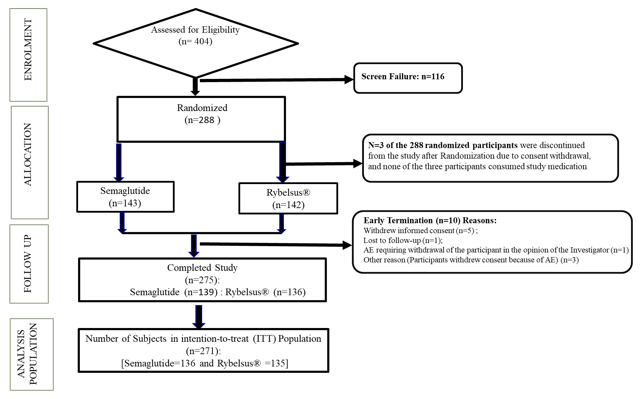
Study population characteristics Between June 2025 and December 2025, a total of 404 participants were screened during the study, of whom 116 failed screening and 288 were enrolled in the study (Figure 1). In the safety population (SS) 285 participants were included (143 participants in the Semaglutide and 142 participants in the Rybelsus® treatment group). Figure 1. CONSORT diagram displaying the flow of participants through the study. In the SS population, 173 (60.7 %) were males and 112 (39.3 %) were females. The mean age of the participants in the Semaglutide arm was slightly higher than the Rybelsus® arm. The mean (SD) age of the participants in the safety population was 48.02 (9.49) years (Semaglutide: 49.05 (9.71) years and Rybelsus®: 46.98 (9.18) years).
The mean (SD) BMI of the participants in the safety population was 28.76 (3.45) kg/m2 (Semaglutide: 28.82 (3.65) kg/m2 and Rybelsus® : 28.71(3.24) kg/m2). In the semaglutide arm, there were 87 (60.8 %) males and 56 (39.2 %) females. In the Rybelsus® arm, there were 86 (60.6 %) males and 56 (39.4 %) females. Demographic and baseline characteristics were comparable between the two treatment groups (Table 1). The mean (SD) for treatment compliance at week 24 was 91.66 % (6.21) [91.78 % for Semaglutide and 91.54 % for Rybelsus® ]. All the participants tested negative, demonstrating that treatment with Semaglutide did not elicit an immune response, supporting its favourable immunogenicity profile over the 24-week study period.
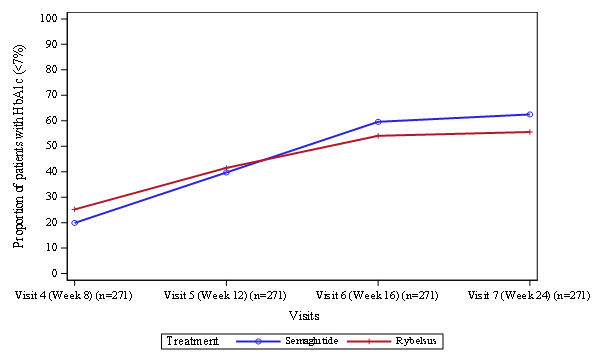
Table 1. Summary of demography and baseline characteristics. Demographic Variable Statistic Semaglutide (N=143) Rybelsus® (N=142) Overall (N=285) Age (Year) Mean (SD) 49.05 (9.71) 46.98 (9.18) 48.02 (9.49) Gender Male 87 (60.8%) (60.6%) (60.7%) Female 56 (39.2%) (39.4%) (39.3%) BMI Mean (SD) 28.82 (3.65) 28.71 (3.24) 28.76 (3.45) HbA1c Mean (SD) 8.25 (0.64) 8.13 (0.69) 8.19 (0.67) FPG Mean (SD) 138.58 (42.15) 135.09 (42.66) 136.86 (42.36) PPG Mean (SD) 210.12 (73.89) 201.73 (74.80) 206.00 (74.32) Table 1 abbreviations: SD, Standard Deviation; BMI: Body Mass Index; HbA1c: Glycated hemoglobin; FPG: Fasting Plasma Glucose; PPG: Post-Prandial Glucose. Test Product: Semaglutide Tablets of Dr. Reddy’s Laboratories Ltd, India Comparator Product: Rybelsus® (Semaglutide) Tablets manufactured by: Novo Nordisk A/S Efficacy results In the Intention-to-Treat (ITT) population [N=271 (Semaglutide=136 and Rybelsus®=135)], at week 24, the mean (SE) reduction in HbA1c from baseline observed in the Semaglutide group was -1.50, which was comparable to the observed in Rybelsus® group at -1.21.
The LS mean difference amounted to -0.29 (95% CI: -0.49:0.13), demonstrating non-inferiority of Oral Semaglutide (Generic) to Rybelsus® (Figure 2). In the Per Protocol Population (PP), the mean reduction in HbA1c from baseline to week 24 was also comparable. Figure 2. Line graph of Actual values at week 8, week 12, week 16 and week 24 in HbA1c (<7%) – ITT population (N=271). For mean change in FPG from baseline to week 12, the least mean (SE) for the Semaglutide arm was -16.00 mg/dl (3.15) and for the Rybelsus® arm was -20.11 mg/dl (3.20). The difference (95 % CI) was 4.11 (-4.73:12.95). At week 24, the difference (95 % CI) was -7.69 (-19.41:4.04).
For mean change in PPG from baseline to week 12, both treatments achieved similar reduction in 2-hr PPG, with decreases of -51.68 mg/dL for Semaglutide and -38.12 mg/dL for Rybelsus®. The least mean (SE) for the Semaglutide arm was -48.01 (5.31) and for the Rybelsus® arm was -41.92 (5.40). Similar reduction in 2-hr PPG was observed at Week 24 (-44.35 mg/dL with Semaglutide and -47.71 mg/dL with Rybelsus®. At week 24, the difference (95 % CI) was 10.33 (-7.26:27.92). There was comparable reduction in weight from baseline to week 12 and week 24 in both arms. Decrease in body weight was observed in both groups, with mean change of -3.25kg for Semaglutide and -3.19kg for Rybelsus® at 12 weeks and -5.77 kg for Semaglutide and -5.92 kg for Rybelsus® at 24 weeks.
Patients with higher body mass index (BMI) (>27 kg/m2) showed larger decrease in weight as compared to patients with lower BMI (18-27 kg/m2) (Table 2). Table 2. Mean change in body weight from baseline to week 12 and week 24. BMI Week Treatment Change in Body Weight from baseline[(Mean (SE)] Difference (95% CI)1 BMI 18-27 kg/m2 Week 12 Semaglutide (N=50) −3.43 (0.29) - 0.21 (−1.07, 0.65) Rybelsus® (N=42) −3.22 (0.32) Week 24 Semaglutide (N=50) −6.14 (0.46) 0.02 (-1.33, 1.37) Rybelsus® (N=42) −6.16 (0.50) BMI > 27 kg/m2 Week 12 Semaglutide (N=92) −3.15 (0.23) 0.04 (−0.59, 0.67) Rybelsus® (N=96) −3.19 (0.22) Week 24 Semaglutide (N=92) −5.56 (0.36) 0.26 (−0.74, 1.25) Rybelsus® (N=96) −5.82 (0.35) [1] The difference in mean weight and the corresponding 95% CI for the treatment difference.
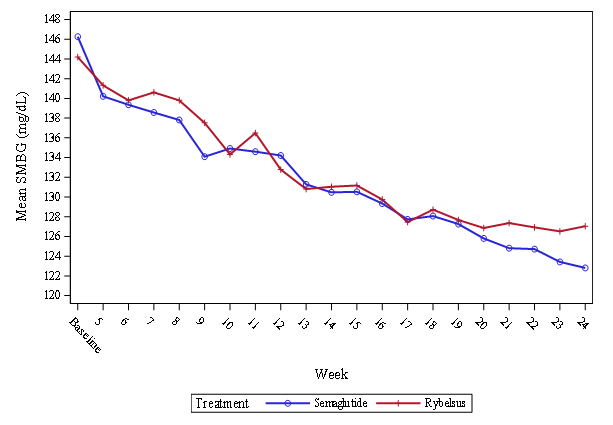
Table 2 abbreviations: CI; confidence interval. At week 12 and week 24, therapeutic glycemia response rate (HbA1c <7 %) in the Semaglutide arm was similar to Rybelsus® and the 95% CI of the difference between the percentages of response rates was (-0.14:0.09) and (-0.06:0.17) respectively. Throughout the study period, SMBG (Self-Monitoring of Blood Glucose) was performed randomly by the patients. The mean SMBG for first 4 weeks was considered as baseline. Subsequently, mean of every week was analysed. As shown in figure 3, there had been consistent decrease in the random SMBG value throughout the study period. Figure 3. Line graph of summary of actual values at baseline, week 5 to 24 in SMBG parameter – Safety population (N=285).
Table 3. TEAEs by system organ class (SOC) and preferred term (PT) in ≥2% of patients –safety set population. Preferred Term Semaglutide(N=143) n (%) Episodes Rybelsus® (N=142) n (%) Episodes Overall (N=285) n (%) Episodes Abdominal distension 7(4.9%)[7] 6(4.2%)[6] 13(4.6%)[13] Abdominal pain 3(2.1%)[3] 5(3.5%)[6] 8(2.8%)[9] Constipation 8(5.6%)[9] 11(7.7%)[13] 19(6.7%)[22] Diarrhoea 9(6.3%)[20] 17(12.0%)[18] 26(9.1%)[38] Gastritis 5(3.5%)[11] 5(3.5%)[6] 10(3.5%)[17] Hyperchlorhydria 9(6.3%)[11] 6(4.2%)[7] 15(5.3%)[18] Nausea 24(16.8%)[30] 16(11.3%)[17] 40(14.0%)[47] Vomiting 9(6.3%)[11] 5(3.5%)[5] 14(4.9%)[16] Fatigue 5(3.5%)[5] 4(2.8%)[4] 9(3.2%)[9] Pyrexia 4(2.8%)[4] 6(4.2%)[6] 10(3.5%)[10] Nasopharyngitis 3(2.1%)[3] 5(3.5%)[5] 8(2.8%)[8] Decreased appetite 7(4.9%)[10] 7(4.9%)[7] 14(4.9%)[17] Headache 6(4.2%)[7] 11(7.7%)[12] 17(6.0%)[19] No change in Liver Enzyme (AST and ALT) was reported for subjects with Nausea and Vomiting. Safety results Of the 285 patients in SS population, 80 participants (55.9%) experienced at least one treatment emergent adverse event (TEAE).
The incidence was balanced across the two treatment groups, with 80 participants (55.9 %) in the Semaglutide arm (N=143) and 75 participants (52.8%) in the Rybelsus® arm (N=142) reporting TEAEs. Gastrointestinal disorders were the most frequently reported TEAEs, occurring in 115 participants (40.4%) overall, with similar incidence in the Semaglutide arm (58/143; 40.6%) and the Rybelsus® arm (57/142; 40.1%). The most common events were nausea (40 participants; 14.0%), diarrhea (26 participants; 9.1%), constipation (19 participants; 6.7%), vomiting (14 participants; 4.9%), hyperchlorhydria (15 participants; 5.3%), and abdominal distension (13 participants; 4.6%). General disorders and administration site conditions were reported in 21 participants (7.4%) overall, with comparable rates between the Semaglutide arm (12/143; 8.4%) and the Rybelsus® arm (9/142; 6.3%).
Pyrexia (10 participants; 3.5%) and fatigue (9 participants; 3.2%) were the most common events. Nervous system disorders occurred in 23 participants (8.1%) overall, more frequently in the Rybelsus® arm (15/142; 10.6%) than the Semaglutide arm (8/143; 5.6%). Headache was the predominant event (17 participants; 6.0%). Metabolism and nutrition disorders were observed in 22 participants (7.7%) overall, with a higher incidence in the Rybelsus® arm (13/142; 9.2%) compared with the Semaglutide arm (9/143; 6.3%), most commonly decreased appetite (14 participants; 4.9%). No Anti-drug (Semaglutide) Antibodies (ADA) were detected at screening and at End of study in either treatment arm. Thus, Neutralizing Antibodies Tests were not performed.
Discussion
The current randomized controlled study conducted in India involving 288 patients clearly established that Oral Semaglutide (Generic) was non-inferior to Rybelsus® with respect to the change in HbA1c parameter after continuous once daily treatment over a period of 24 weeks. PP analyses of the change in HbA1c parameter following the 24-week treatment were complemented by the non-inferiority of Semaglutide to Rybelsus® observed in ITT population. The magnitude of mean HbA1c reduction is consistent with that previously reported in the PIONEER clinical trial programme.12-23 Additionally, reductions in FPG and PPG were observed through week 12 and week 24. Furthermore, there was a comparable decrease in random SMBG values in both treatment arms.
The greater glycaemic efficacy of semaglutide suggests that simple dose escalation would be possible for patients unable to reach treatment targets. The incidence of hypoglycemia was comparable with innovator data. At Week 24, change in body weight from baseline were observed in the majority of participants with comparable patterns across groups. The body weight loss observed with semaglutide could be because of lowered appetite and lowered energy intake. The current study unequivocally demonstrated the noninferior efficacy and safety of Oral Semaglutide (Generic) as compared to Rybelsus® in patients with T2DM from India. While the authors acknowledge possible limitations, including but not limited to the potential for not meeting non-inferiority at some secondary endpoints, which could be attributed to the a-priori sample size calculation being based only on the primary efficacy endpoint, the findings are nonetheless justifiably robust.
The TEAE profile of Semaglutide was comparable to that of Rybelsus®. In particular, consistent with the GLP-1 receptor agonist drug class, the most prevalent adverse events were gastrointestinal in nature in both treatment groups. Additionally, treatment with Semaglutide did not elicit an immune response, supporting its favourable immunogenicity profile over the 24-week study period. The hypoglycaemic episodes, and the corresponding event rates, were low and comparable in both the treatment groups. Overall, Semaglutide was found to be generally safe and well tolerated over 24 weeks of treatment. There were no SAEs or deaths reported in the study. In conclusion, the present study confirms that generic semaglutide provides glycemic control non-inferior to comparator (Rybelsus® ) under conditions reflective of clinical practice.
Data Availability Statement
The data that support the findings of this study are available from the corresponding author, upon reasonable request. Clinical Trial Registry Number CTRI/2025/06/088110
Author Contributions
PA conceived and designed the study. PA, AKS, SRW, JMS interpreted the data. JMS & EC prepared draft of the article. PA, AKS, SRW, JMS, EC critically reviewed the manuscript.
The authors having affiliation to 1-20 are the investigators who recruited the patients and reviewed this manuscript. PA & AKS approved the article to be communicated for publication. Ethical Consideration Institutional ethics committee of each centre approved the study. Written informed consent was obtained from each patient prior to screening on the approved informed consent form (ICF). The study was conducted in compliance with the ethical principles that originate in the Declaration of Helsinki and the International Conference on Harmonization (ICH) guidelines for good clinical practice (GCP) and applicable regulatory requirements.
Figures and Tables
| Demographic Variable | Statistic | Semaglutide (N=143) | Rybelsus® (N=142) | Overall (N=285) |
|---|---|---|---|---|
| Age (Year) | Mean (SD) | 49.05 (9.71) | 46.98 (9.18) | 48.02 (9.49) |
| Gender | Male | 87 (60.8%) | 86 (60.6%) | 173 (60.7%) |
| Female | 56 (39.2%) | 56 (39.4%) | 112 (39.3%) | |
| BMI | Mean (SD) | 28.82 (3.65) | 28.71 (3.24) | 28.76 (3.45) |
| HbA1c | Mean (SD) | 8.25 (0.64) | 8.13 (0.69) | 8.19 (0.67) |
| FPG | Mean (SD) | 138.58 (42.15) | 135.09 (42.66) | 136.86 (42.36) |
| PPG | Mean (SD) | 210.12 (73.89) | 201.73 (74.80) | 206.00 (74.32) |
| BMI | Week | Treatment | Change in Body Weight from base-line[(Mean (SE)] | Difference (95% CI)1 |
|---|---|---|---|---|
| BMI 18-27 kg/m2 | Week 12 | Semaglutide (N=50) | −3.43 (0.29) | - 0.21 (−1.07, 0.65) |
| Rybelsus® (N=42) | −3.22 (0.32) | |||
| Week 24 | Semaglutide (N=50) | −6.14 (0.46) | 0.02 (-1.33, 1.37) | |
| Rybelsus® (N=42) | −6.16 (0.50) | |||
| BMI > 27 kg/m2 | Week 12 | Semaglutide (N=92) | −3.15 (0.23) | 0.04 (−0.59, 0.67) |
| Rybelsus® (N=96) | −3.19 (0.22) | |||
| Week 24 | Semaglutide (N=92) | −5.56 (0.36) | 0.26 (−0.74, 1.25) | |
| Rybelsus® (N=96) | −5.82 (0.35) |
| Preferred Term | Semaglutide(N=143) n (%) Episodes | Rybelsus®(N=142) n (%) Episodes | Overall (N=285) n (%) Episodes |
|---|---|---|---|
| Abdominal distension | 7(4.9%)[7] | 6(4.2%)[6] | 13(4.6%)[13] |
| Abdominal pain | 3(2.1%)[3] | 5(3.5%)[6] | 8(2.8%)[9] |
| Constipation | 8(5.6%)[9] | 11(7.7%)[13] | 19(6.7%)[22] |
| Diarrhoea | 9(6.3%)[20] | 17(12.0%)[18] | 26(9.1%)[38] |
| Gastritis | 5(3.5%)[11] | 5(3.5%)[6] | 10(3.5%)[17] |
| Hyperchlorhydria | 9(6.3%)[11] | 6(4.2%)[7] | 15(5.3%)[18] |
| Nausea | 24(16.8%)[30] | 16(11.3%)[17] | 40(14.0%)[47] |
| Vomiting | 9(6.3%)[11] | 5(3.5%)[5] | 14(4.9%)[16] |
| Fatigue | 5(3.5%)[5] | 4(2.8%)[4] | 9(3.2%)[9] |
| Pyrexia | 4(2.8%)[4] | 6(4.2%)[6] | 10(3.5%)[10] |
| Nasopharyngitis | 3(2.1%)[3] | 5(3.5%)[5] | 8(2.8%)[8] |
| Decreased appetite | 7(4.9%)[10] | 7(4.9%)[7] | 14(4.9%)[17] |
| Headache | 6(4.2%)[7] | 11(7.7%)[12] | 17(6.0%)[19] |
References
- Davies MJ, Aroda VR, Collins BS, et al. Management of Hyperglycemia in Type 2 Diabetes, 2022. A Consensus Report by the American Diabetes Association (ADA) and the European Association for the Study of Diabetes (EASD). Diabetes Care. 2022;45:2753-2786
- Pradeepa R, Mohan V. Epidemiology of type 2 diabetes in India. Indian J Ophthalmol. 2021;69:2932-2938.
- American Diabetes Association.6. Glycemic Targets: Standards of Medical Care in Di abetes 2020. Diabetes Care 2020;43: S66–76. 10.2337/dc20-S006
- Feingold KR. Oral and Injectable (Non-Insulin) Pharmacological Agents for the Treatment of Type 2 Diabetes. [Updated 2024 Sep 11]. In: Feingold KR, Ahmed SF, Anawalt B, et al., editors. Endotext [Internet]. South Dartmouth (MA): MDText.com, Inc.; 2000-. Available from: https://www.ncbi.nlm.nih.gov/books/ NBK279141/
- El Sayed NA, Aleppo G, Aroda VR, et al. Pharmacologic Approaches to Glycemic Treatment: Standards of Care in Diabetes – 2023. Diabetes Care, 2023.
- Ruissen MM, Rodriquez-Gutierrez R, Montori VM, et al. Making Diabetes Care Fit – Are We Making Progress? Front Clin Diabetes Healthc, 2021.
- Potts JE, Gray LJ, Brady EM, et al. The effect of glucagonlike peptide 1 receptor agonists on weight loss in type 2 diabetes: a systematic review and mixed treatment comparison meta-analysis. PLoS One. 2015; 10: e0126769.
- Van Can J, Sloth B, Jensen CB, et al. Effects of the once-daily GLP-1 analog liraglutide on gastric emptying, glycemic parameters, appetite and energy metabolism in obese, non-diabetic adults. Int J Obes (Lond) 2014; 38: 784–93.
- Farr OM, Sofopoulos M, Tsoukas MA, et al. GLP-1 receptors exist in the parietal cortex, hypothalamus and medulla of human brains, and the GLP-1 analogue liraglutide alters brain activity related to highly desirable food cues in individuals with diabetes: a crossover, randomised, placebo-controlled trial. Diabetologia 2016; 59: 954–65
- Secher A, Jelsing J, Baquero AF, et al. The arcuate nucleus mediates GLP-1 receptor agonist liraglutide-dependent weight loss. J Clin Invest 2014; 124: 4473–88
- Aroda VR, Rosenstock J, Terauchi Y, Altuntas Y, Lalic NM, Morales Villegas EC, et al PIONEER 1:Randomized clinical trial of the efficacy and safety of oral semaglutide monotherapy in comparison with placebo in patients with type 2 diabetes Diabetes Care 2019 42 1724–32.
- Rodbard HW, Rosenstock J, Canani LH, Deerochanawong C, Gumprecht J, Lindberg SØ, et al Oral semaglutide versus empagliflozin in patients with type 2 diabetes uncontrolled on metformin:The PIONEER 2 trial Diabetes Care 2019 42 2272–81.
- Rosenstock J, Allison D, Birkenfeld AL, Blicher TM, Deenadayalan S, Jacobsen JB, et al Effect of additional oral semaglutide vs sitagliptin on glycated hemoglobin in adults with type 2 diabetes uncontrolled with metformin alone or with sulfonylurea:The PIONEER 3 randomized clinical trial JAMA 2019 321 1466–80.
- Pieber TR, Bode B, Mertens A, Cho YM, Christiansen E, Hertz CL, et al PIONEER 7 investigators. Efficacy and safety of oral semaglutide with flexible dose adjustment versus sitagliptin in type 2 diabetes (PIONEER 7): A multicentre, open-label, random ised, phase 3a trial Lancet Diabetes Endocrinol. 2019 7 528–39 doi:10.1016/ S2213 8587(19)30194-9. Epub 2019 Jun 9. Erratum in: Lancet Diabetes Endocrinol. 2019 Sep;7(9):e21. PMID:31189520.
- Pratley R, Amod A, Hoff ST, Kadowaki T, Lingvay I, Nauck M, et al Oral semaglutide versus subcutaneous liraglutide and placebo in type 2 diabetes (PIONEER 4):A ran domised, double-blind, phase 3a trial [published correction appears in Lancet 2019;394:e1] Lancet 2019 394 39–50.
- Zinman B, Aroda VR, Buse JB, Cariou B, Harris SB, Hoff ST, et al Efficacy, safety, and tolerability of oral semaglutide versus placebo added to insulin with or without metformin in patients with type 2 diabetes:The PIONEER 8 trial Diabetes Care 2019 42 2262–71.
- Mosenzon O, Blicher TM, Rosenlund S, Eriksson JW, Heller S, Hels OH, et al Efficacy and safety of oral semaglutide in patients with type 2 diabetes and moderate renal impairment (PIONEER 5):A placebocontrolled, randomised, phase 3a trial [published correction appears in Lancet Diabetes Endocrinol 2019;7:e21] Lancet Diabetes Endo crinol 2019 7 515–27.
- Aroda VR, Rosenstock J, Terauchi Y, Altuntas Y, et,al, PIONEER 1 Investigators; PIONEER 1: Randomized Clinical Trial of the Efficacy and Safety of Oral Semaglutide Monotherapy in Comparison with Placebo in Patients with Type 2 Diabetes. Diabetes Care 1 September 2019; 42 (9): 1724–1732. https://doi org/10.2337/dc19-0749
- Rodbard HW, Dougherty T, Taddei-Allen P. Efficacy of oral semaglutide: overview of the PIONEER clinical trial program and implications for managed care. Am J Manag Care. 2020 Dec;26(16 Suppl):S335-S343. doi: 10.37765/ajmc.2020.88554 PMID: 33439582.
- Rudofsky, G., Amadid, H., Braae, U.C. et al. Oral Semaglutide Use in Type 2 Diabetes: A Pooled Analysis of Clinical and Patient-Reported Outcomes from Seven PIONEER REAL Prospective Real-World Studies. Diabetes Ther 16, 73–87 (2025). https://doi.org/10.1007/s13300-024-01668-6
- Araki E, Terauchi Y, Watada H, Deenadayalan S, Christiansen E, Horio H, Kadowaki T. Efficacy and safety of oral semaglutide in Japanese patients with type 2 diabetes: A post hoc subgroup analysis of the PIONEER 1, 3, 4 and 8 trials. Diabetes Obes Metab. 2021 Dec;23(12):2785-2794. doi: 10.1111/dom.14536 Epub 2021 Sep 27. PMID: 34472698; PMCID: PMC9293331.
- Aroda VR, Saugstrup T, Buse JB, Donsmark M, Zacho J, Davies MJ. Incorporating and interpreting regulatory guidance on estimands in diabetes clinical trials: The PIONEER 1 randomized clinical trial as an example. Diabetes Obes Metab. 2019 Oct;21(10):2203-2210. doi: 10.1111/dom.13804 Epub 2019 Jun 30. PMID: 31168921; PMCID: PMC6771751.
- Husain M, Bain SC, Jeppesen OK, et al. Oral semaglutide versus placebo in patients with type 2 diabetes (PIONEER 1): a randomised, double-blind, phase 3 trial. The Lancet. 2019;394(10192):39–50. https://doi.org/10.1016/S0140-6736(19)31271-1
This is a text version generated from the article. For the formatted version of record (with original tables & figures), download the PDF →